
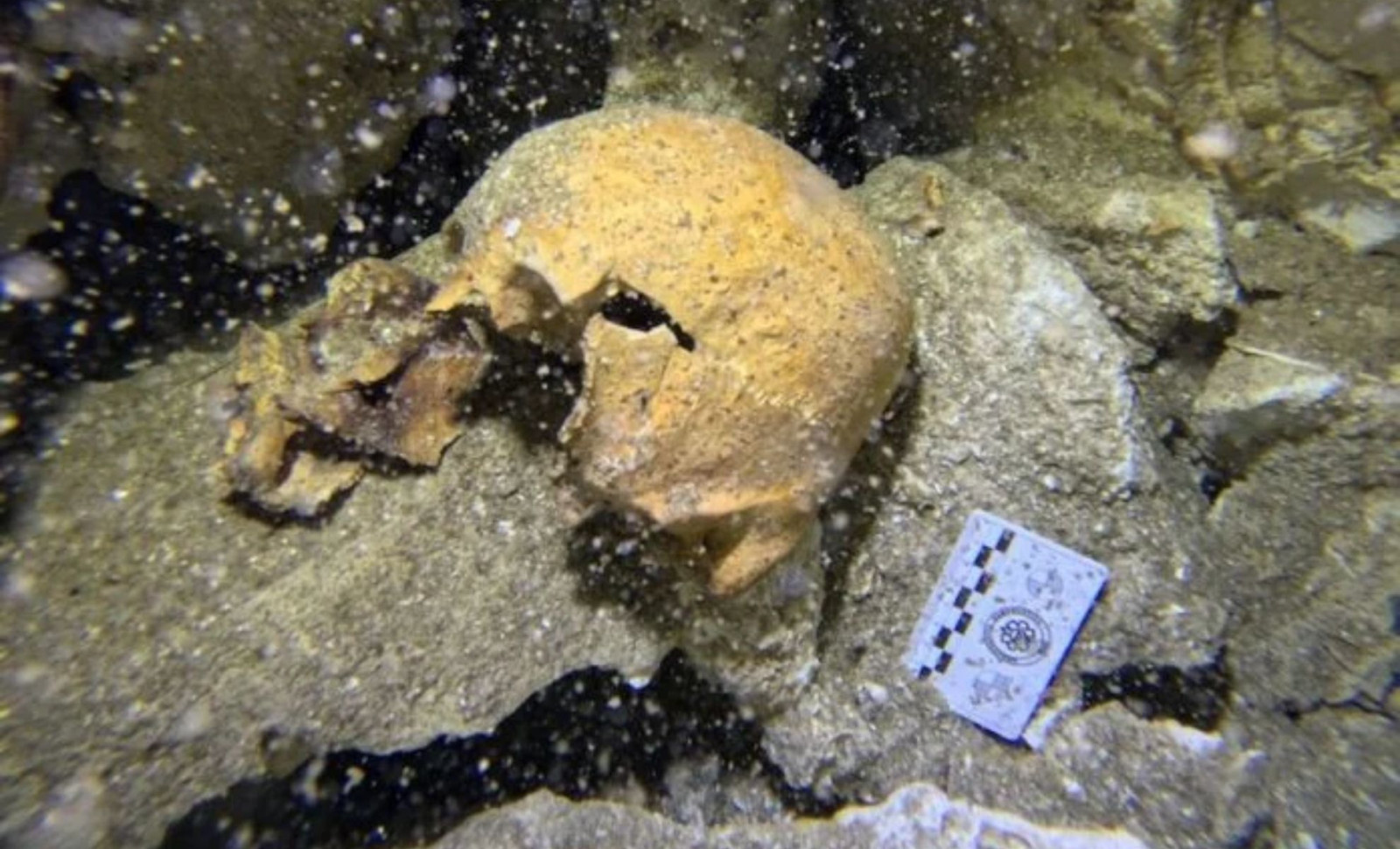
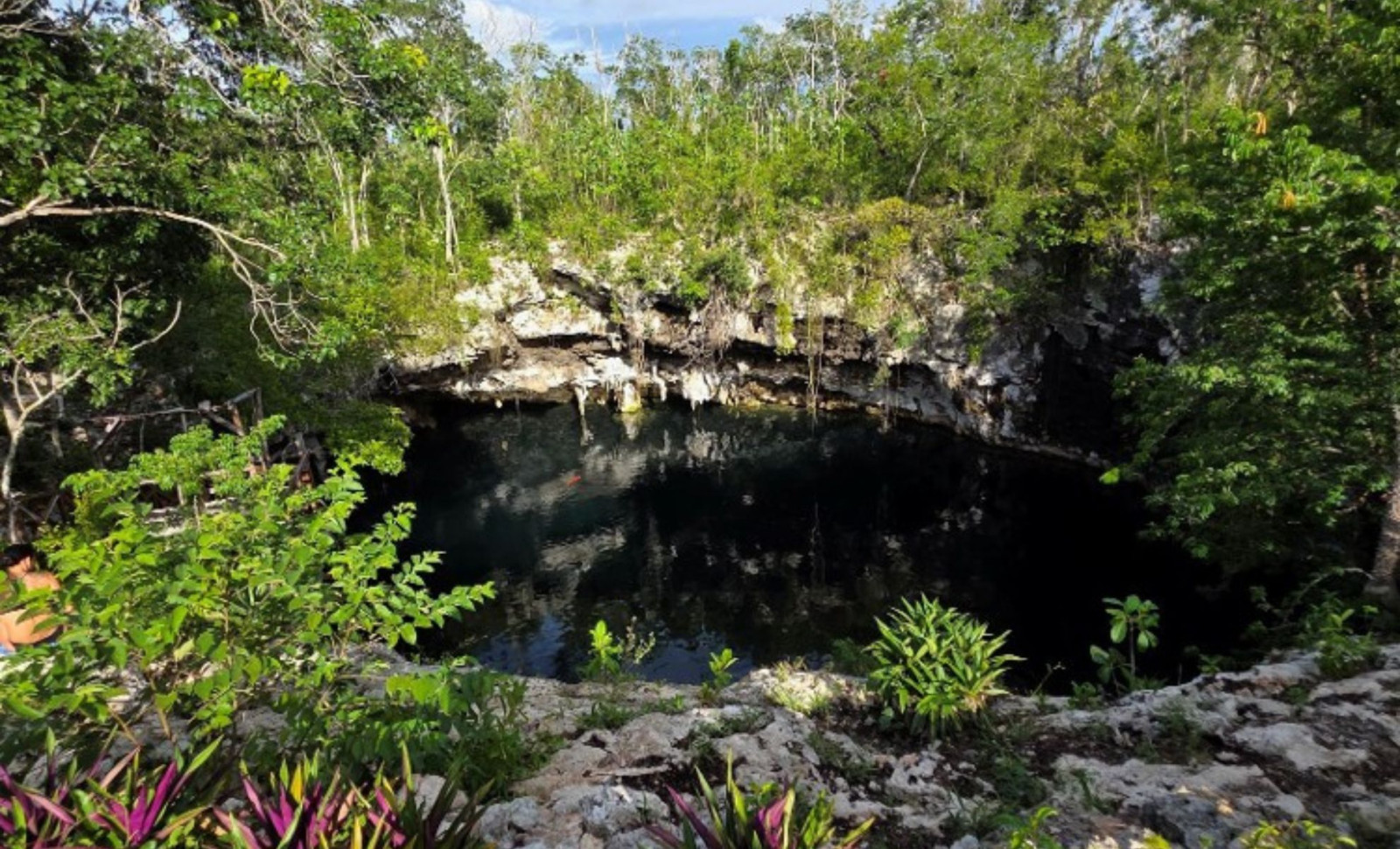
In Mexico, archaeologists have uncovered the skeletal remains of a likely young Maya woman along with a collection of ancient ceramic vessels deep within Cenote Yaakun, a submerged sinkhole located near Playa del Carmen.
Dubbed Yatzila, which translates to “beloved person” in the Maya language, the individual was discovered during an underwater survey spearheaded by the Sub-directorate of Underwater Archaeology (SAS) at the National Institute of Anthropology and History (INAH). Additionally, the team found another section containing largely undisturbed Maya pottery.
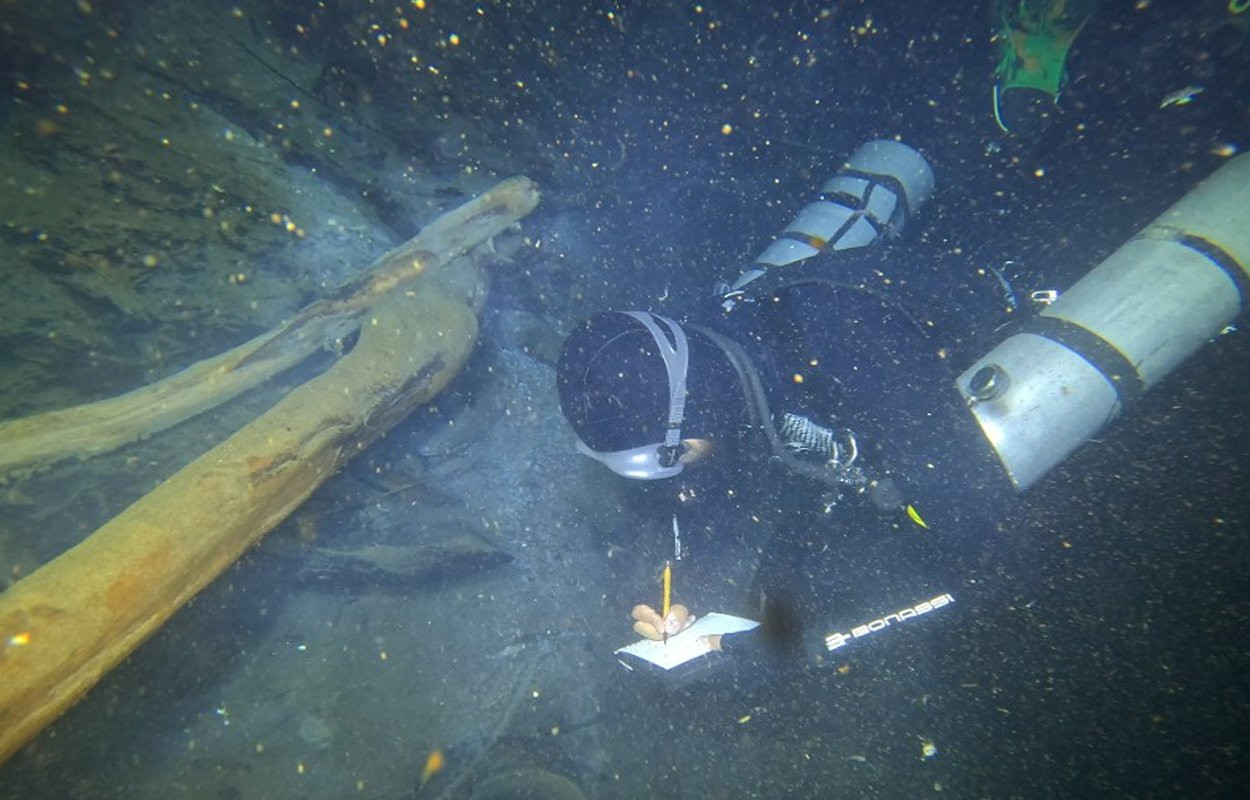
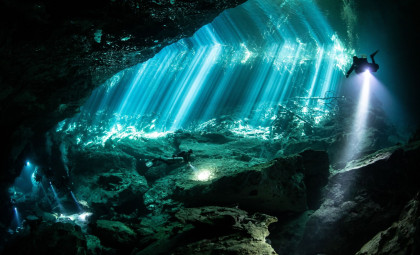
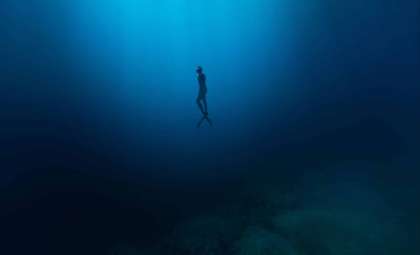
Local guardians and technical divers brought attention to cultural remnants inside the cenote in late 2025. Archaeologists then conducted an initial operation, spending five days diving at depths ranging from 42 to 53 meters, mapping the site and noting the positions of artifacts and remains.

Two separate archaeological zones about 30 meters apart were identified: one with human and animal bones, the other containing ceramic vessels. These discoveries led to the launch of the Cenote Yaakun Research Project, now formally backed by INAH’s Archaeology Council.
Exploring a Concealed Maya Site Beneath the Water
Investigations at Cenote Yaakun unveiled a complex submerged environment. The cenote plunges to depths exceeding 80 meters, with archaeological materials resting in a sloped cavity beneath a thick layer of hydrogen sulfide.
Underwater archaeologist Gustavo García García employed photogrammetry to generate detailed site maps. This approach enabled thorough documentation while preserving the integrity of the remains.
The project underscores the importance of local communities in protecting archaeological treasures. Culture Secretary Claudia Curiel de Icaza emphasized:
“Scientific research and social participation are fundamental to preserving these contexts intact and passing them on to future generations.”
While several elements remained undisturbed, a few skull fragments had shifted. García García noted:
“Several elements remain in their original positions, although some fragments of the skull had been displaced,” he said. “This underlines the fragility of underwater archaeological contexts. Our objective is to preserve the site in situ and encourage both the local community and diving groups to help protect it.”
Scientific Examination Begins on Yatzil’s Ancient Remains
The human bones were located between 42 and 46 meters underwater, accompanied by animal remains. Physical anthropologist Salvador Isab Estrada identified bones from the arms, legs, pelvis, and lower jaw during the first analysis.
Dental examination aided in estimating the individual's age. Three molars remained intact, while patterns of tooth wear and the absence of a premolar suggested she was a young adult woman aged between 18 and 25 years.
The exact identity and age of Yatzil’s remains remain uncertain. The team anticipates a 2027 expedition to obtain a tooth sample for ancient DNA testing.
Currently, archaeologists have opted against removing the remains. They retrieved only one ceramic shard during the initial fieldwork to conduct laboratory analysis, leaving the site otherwise untouched.
Maya Artifacts Reveal Hidden Chronicles in the Cenote
In the second archaeological zone, three globular ceramic vessels were found at depths nearing 53 meters. One vessel remained intact while the other two were fractured.
Preliminary assessments indicate the pottery correlates with the East Coast Maya tradition and likely dates to the Late Postclassic era, spanning AD 1200 to 1521. Further analysis will be necessary to establish exact dates.
According to the INAH announcement, conservation efforts will create protected zones around these deposits and coordinate with landowners and diving groups to prevent disturbance or damage.
Researchers aim to maintain this underwater time capsule intact, enabling future investigations without altering the original archaeological context.
- Categories:
- News


0 comments
Sign in to Comment