
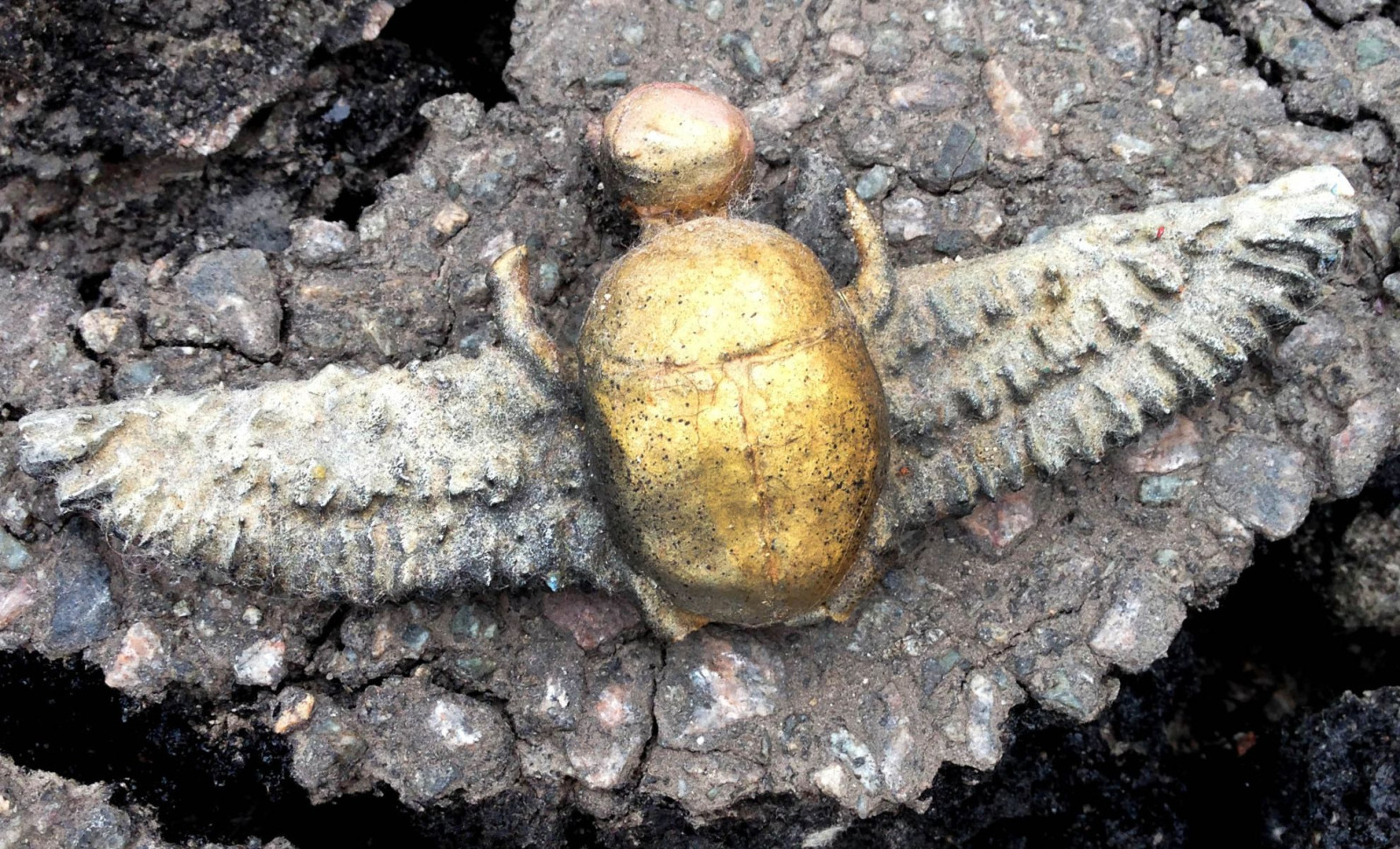
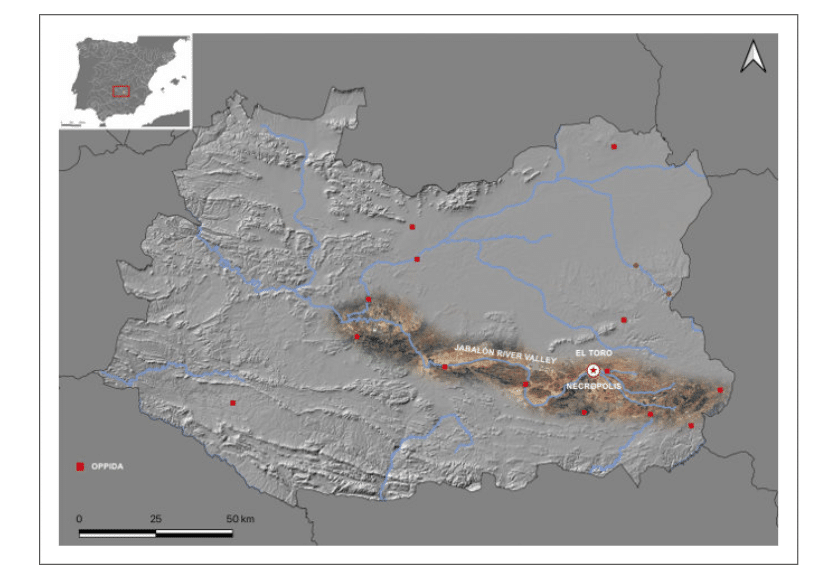
An extraordinary discovery in Spain has experts reconsidering the extent of ancient Mediterranean interactions. Archaeologists uncovered an Egyptian scarab amulet within a burial chamber at the Necropolis of El Toro, a resting place utilized by the Oretani, a native Iberian group.
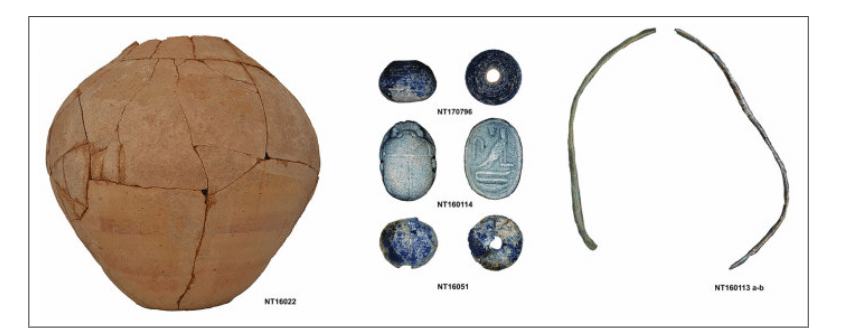
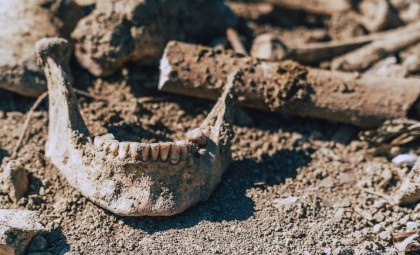
This faience amulet, inscribed with Egyptian hieroglyphs, was found alongside cremated remains. Although the burial customs were distinctly Iberian, the presence of this Egyptian artifact implies it traveled a great distance, predating Roman influence in the region.
The Scarab: A Sacred Egyptian Emblem
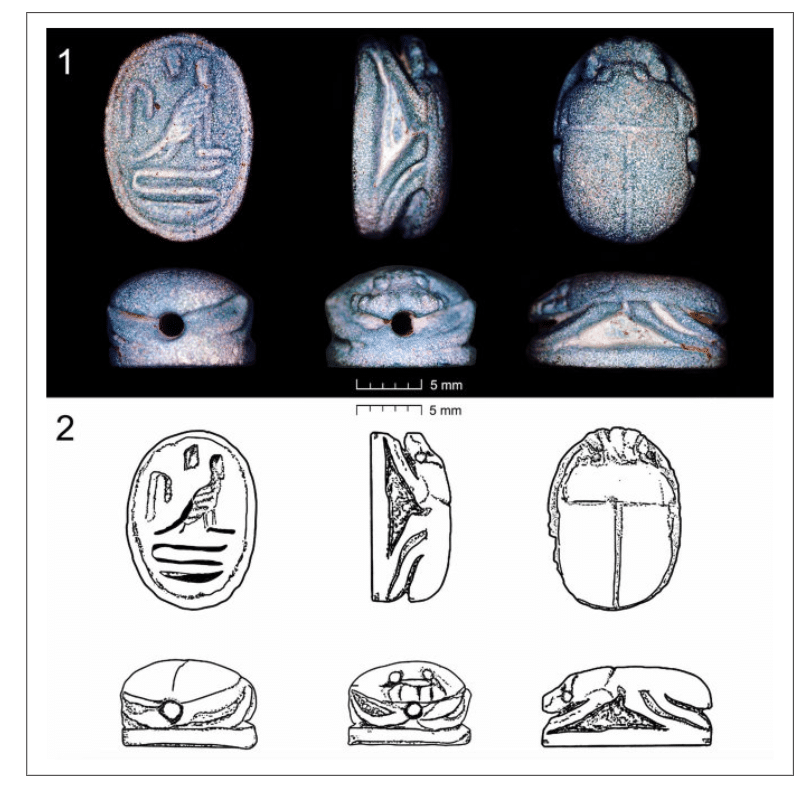
In ancient Egyptian culture, the scarab beetle was revered as a symbol of the sun deity Ra and emblematic of the eternal cycle of life, death, and rebirth. Scarabs were frequently crafted into jewelry and charms believed to protect the wearer in the afterlife. The specimen discovered at El Toro, fashioned from faience, remains well-preserved and contains an inscription with hieroglyphic and Demotic text. Luis Benítez de Lugo Enrich, lead archaeologist on the project, remarked:

“The scarab could have been traded or exchanged between residents of the Phoenician-Punic peninsular settlements and the native population,” he added that, “although we cannot document how much time elapsed until its deposition in the grave goods of [its tomb].”
The engraved text corresponds to titles linked with rulers of Egypt’s 26th Dynasty, implying that this amulet once belonged to an individual of considerable rank, possibly a wealthy trader or noble. Scarabs were mass-produced in Egypt, which allowed their distribution far beyond Egyptian borders, reaching places like the Iberian Peninsula.
Tracing the Scarab’s Journey to Iberia
What might explain the scarab’s presence in Spain? Researchers propose it was transported through expansive Mediterranean trade networks managed by Phoenician and Punic merchants. According to a study featured in Sage Journals, by the 6th century B.C.E., these seafaring traders had built extensive routes linking Egypt to the western Iberian coast. The nearby Jabalón River could have served as a trade artery facilitating such exchanges.
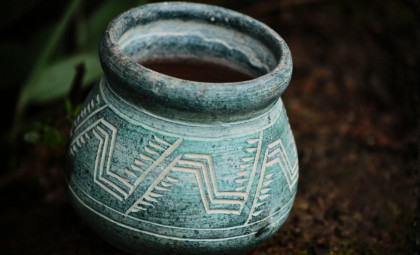
Finding the scarab amid customary Oretani funerary objects, including cremated remains preserved in ceramic urns, highlights a complex cultural interaction between Egyptian, Phoenician, and Iberian peoples. This suggests the amulet’s arrival was part of a broader pattern of ancient connectivity.
Future Prospects of the El Toro Excavation
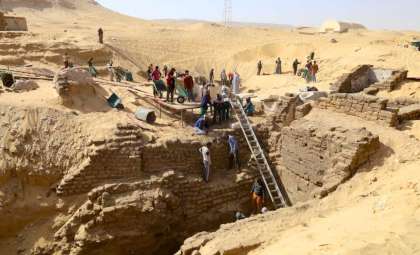
Although the scarab’s appearance is remarkable, its exact route and timing remain uncertain. Since excavations at the site continue, there is hope that more Egyptian-related artifacts may be revealed, shedding light on the extent of early Mediterranean exchanges.
Continued archaeological efforts could enhance understanding of ancient trade networks and the diffusion of Egyptian cultural elements, demonstrating the impressive reach of Egypt’s historical influence.
- Categories:
- Science



0 comments
Sign in to Comment