
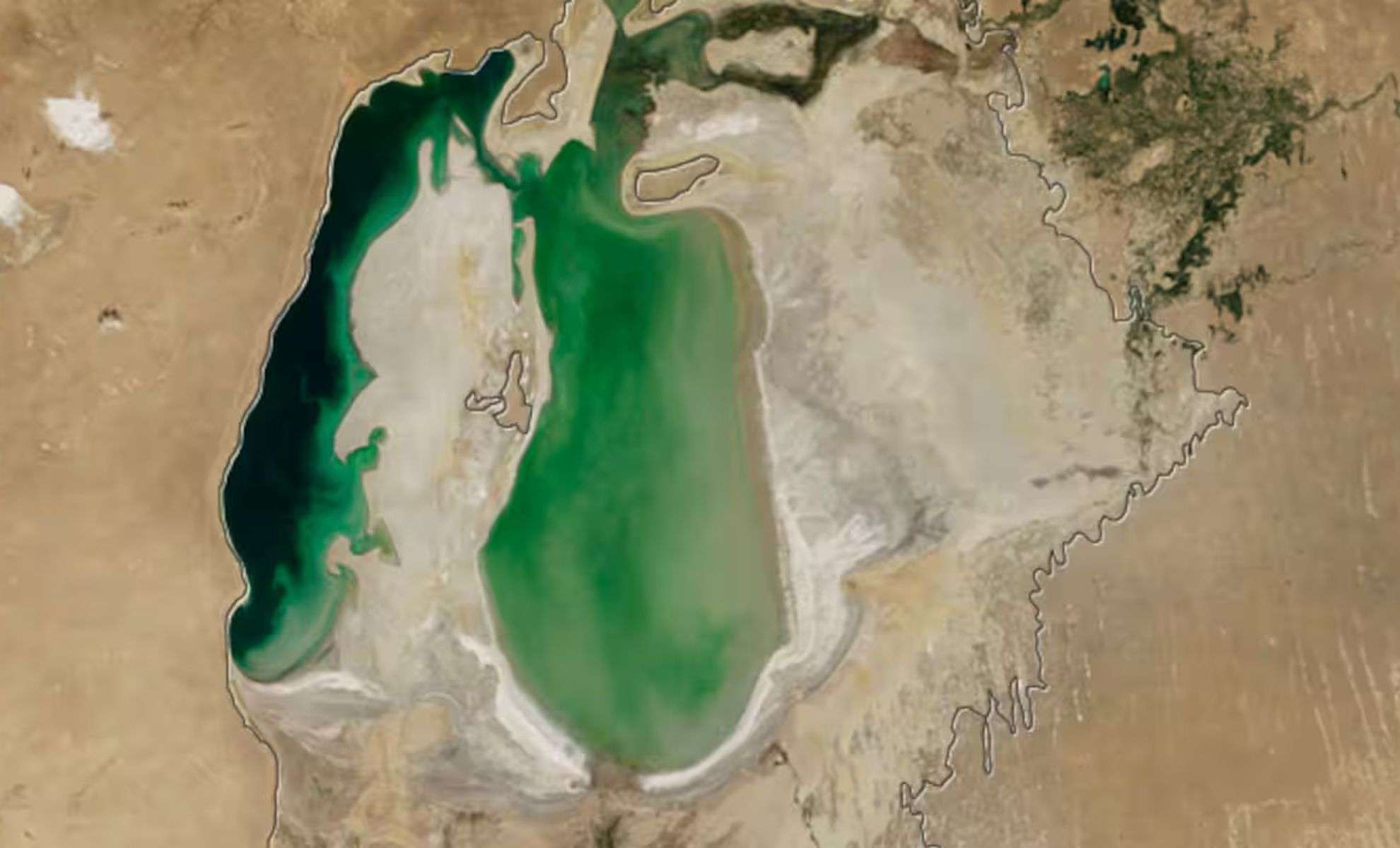
Once ranking as the planet's fourth largest lake, the Aral Sea has largely disappeared, leaving behind a barren, saline wasteland that now disperses harmful dust throughout Central Asia. This former inland sea, situated between Kazakhstan and Uzbekistan, stands as a tragic example of environmental mismanagement.
New research featured in the E3S Web of Conferences reveals a troubling trend: airborne dust from the exposed seabed, now known as the Aralkum Desert, has surged to nearly twice its previous levels since the late 1900s.
The Deliberate Drainage of a Massive Lake
During the 1960s, the Aral Sea spanned over 68,000 square kilometers, hosting a vibrant habitat and sustaining local populations. Yet, driven by Soviet priorities, its main rivers—the Amu Darya and Syr Darya—were diverted extensively to irrigate vast stretches of cotton plantations. This was a deliberate action, not an accident.

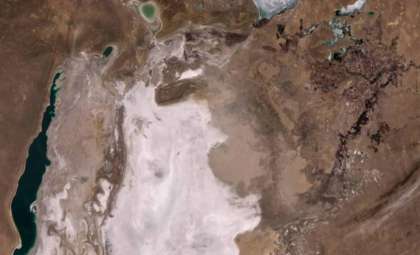
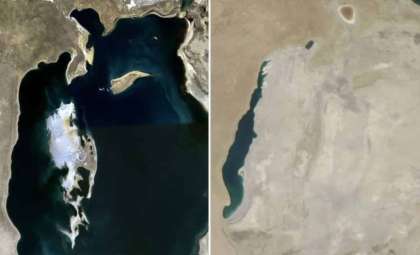
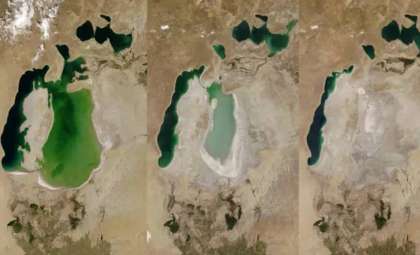
With increasing water diversion, the lake's volume shrank dramatically. By the early 2000s, it had lost over half its surface area, and by 2015, only 8,000 square kilometers of hypersaline pools remained. What once was a lake is now a cracked, lifeless expanse, as satellite imagery confirms.
This is how much the Aral Sea has shrunk from 1984-2022. 😔
Water extraction and other factors have pushed it to the brink, devastating local communities.
We're taking too much from our planet and giving back too little.
It’s time to change our ways. pic.twitter.com/BrZmSvWUg5— WWF (@WWF) February 3, 2025
The Hazardous Dust of a Barren Sea Bed
As the water receded, it exposed a fine, contaminated sediment that now circulates widely over Central Asia. From 1984 to 2015, the quantity of dust emitted annually more than doubled—from 14 to 27 million metric tons, the recent E3S study shows.
What makes this dust particularly dangerous is its composition: it includes residual fertilizers, pesticides, and chemicals from Soviet-era military testing.
The investigation revealed that the decline in air quality impacts areas as far as 800 kilometers away. Furthermore, this mix of airborne pollutants may accelerate the melting of glaciers by darkening ice surfaces and lowering their reflectivity. The desert is not merely an inert landscape but an ongoing source of pollution affecting air quality.
Boats in the desert. In the 1960s the Soviets began draining water from the Uzbekistan lake called the Aral Sea to use for irrigation – 50 years on hundreds of boats are stranded in what became a desert. pic.twitter.com/6Q04SSO1k6
— Ewan Morrison (@MrEwanMorrison) November 14, 2017
Devastation of Wildlife, Economies, and Communities
The ecological disaster extends far beyond geography, striking a blow to local economies, populations, and biodiversity. Rising water salinity in the leftovers of the lake surpassed ocean levels, wiping out native fish. The once-flourishing fishing industry disappeared entirely, leaving coastal towns hollowed out.
One poignant symbol of this tragedy lies in Moynaq, Uzbekistan, where a deserted ship graveyard sits surrounded by sand dunes—a haunting reminder of lost livelihoods and irreversible change, now attracting visitors as an eerie landmark.
Approximately 3 million people reside in the region today, many enduring chronic health ailments. Respiratory illnesses, birth defects, and polluted water sources have increased. Agricultural lands struggle against dust storms that carry pollutants, damaging crops and draining soil nutrients, making farming tougher than ever.
Recovery Efforts and Global Implications
There have been efforts to mitigate the damage. Supported by the European Union and USAID, regional authorities have begun planting salt-resistant vegetation to stabilize dust and reclaim some arid areas. In Kazakhstan, the construction of a dam has led to a partial revival of the North Aral Sea.
Still, the devastation dwarfs these gains. The desert expanse continues to expand, dust storms remain frequent, and climate change intensifies the challenges. The United Nations Convention to Combat Desertification warns that the Aral Sea crisis is part of a larger global pattern.
Similar processes of shrinking lakes due to industrial agriculture and climate stress are unfolding worldwide—from Africa to the Middle East, Australia, and North America. The Aral Sea was simply the earliest to experience these impacts on this scale.
- Categories:
- News





0 comments
Sign in to Comment