
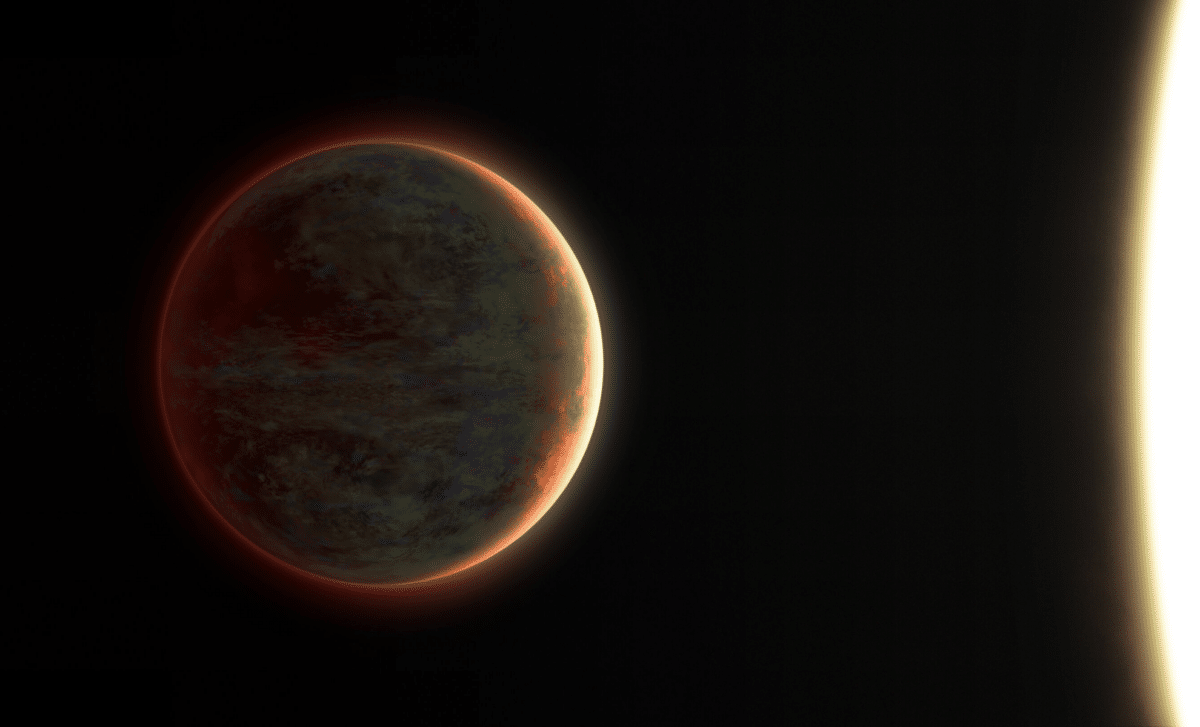
The James Webb Space Telescope (JWST) has delivered groundbreaking observations of the intensely heated gas giant WASP-121 b, revealing remarkable disparities between its dawn and dusk atmospheric regions. Detailed in Nature Astronomy, this finding marks the first direct evidence that certain exoplanets exhibit significant temperature and chemical differences between their morning and evening sides, providing fresh insights into the nature of extreme planetary climates.
Examining Atmospheric Changes Across Longitudes
A research team led by Cyril Gapp from the Max Planck Institute for Astronomy (MPIA) in Heidelberg, Germany, studied the infrared absorption of starlight passing through WASP-121 b’s atmosphere during its transit.
“With its unprecedented observational quality, JWST gives us the most detailed glimpses into distant planets to date: By measuring how starlight absorption changes as WASP-121 b rotates, we probe its atmosphere longitude by longitude,” said Gapp.
Add Cosmo Herald as a Preferred Source

By detecting subtle variations in atmospheric light absorption, the researchers observed distinct contrasts between the planet’s morning and evening terminators. The evening side blocks more starlight than the morning side. This pattern aligns with strong eastward winds that transfer enormous heat from the star-facing dayside to the nightside, causing the atmosphere to expand more on the evening side and absorb stellar radiation more effectively.
Intense Temperature Differences Across the Globe
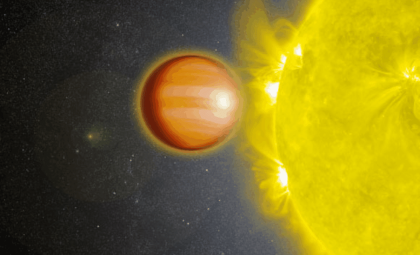
WASP-121 b is a pronounced case of a tidally locked hot Jupiter, with one hemisphere perpetually sun-facing and the other in near-constant darkness.
“WASP-121b is particularly extreme, with average temperatures on the dayside hemisphere being around 2,770 Kelvin, while those on the nightside are closer to about 1,000 Kelvin,” explained co-author Tom Evans-Soma from the University of Newcastle, Australia.
This corresponds to blistering heat of over 2,500°C (4,525°F) on the dayside and approximately 725°C (1,340°F) on the nightside, establishing a massive thermal contrast. Using JWST’s Near-Infrared Spectrograph (NIRSpec), scientists also uncovered the atmosphere’s chemical changes, noting that water molecules dissociate at high temperatures, while carbon monoxide levels increase in hotter regions.
Tracking the Transit and Atmospheric Mechanics
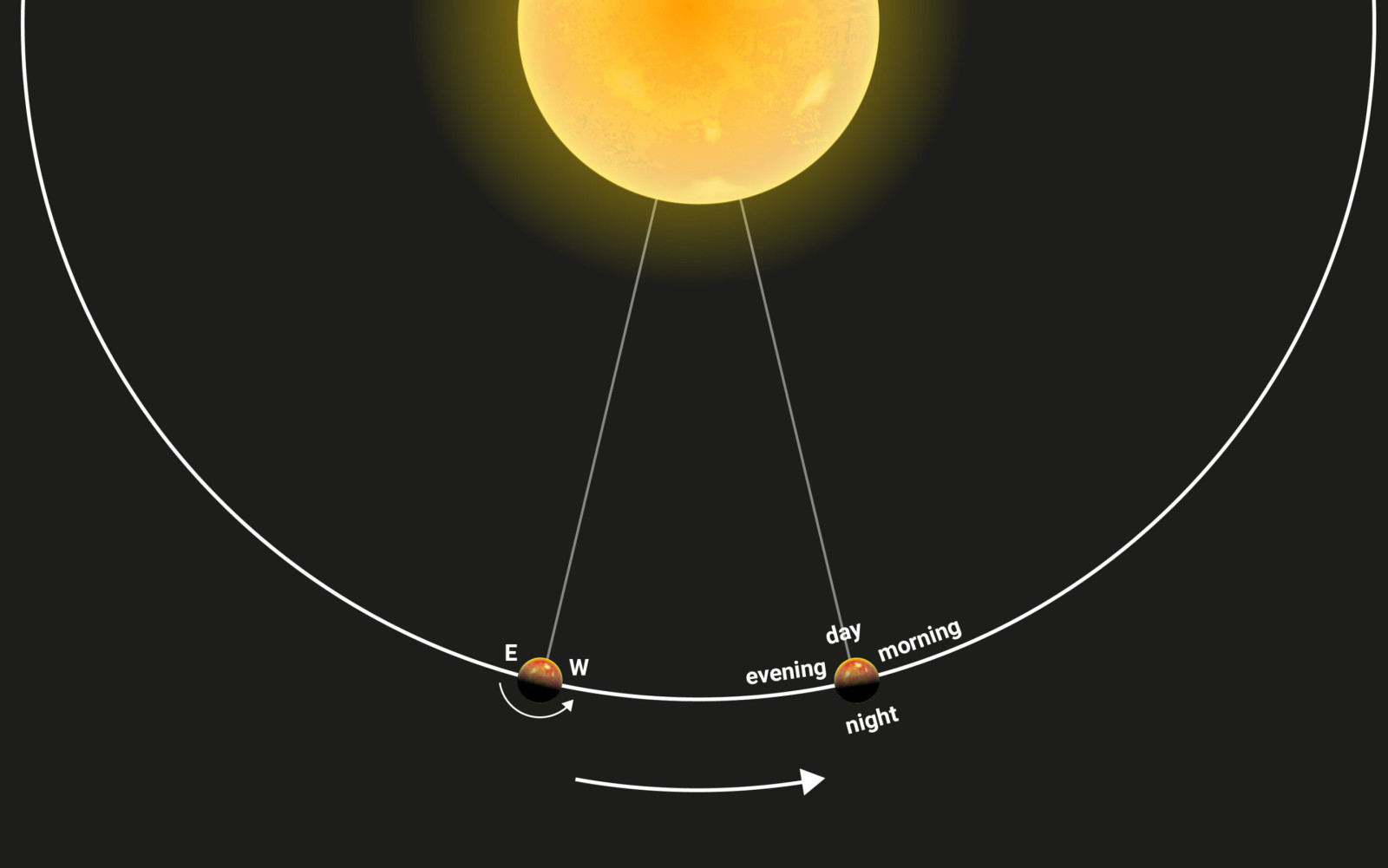
As WASP-121 b passes in front of its star, it turns slightly, letting researchers capture different atmospheric slices. The morning terminator leads the orbital path, while the evening side follows behind. This dynamic observation, combined with spectral data, reveals varying temperatures and molecular compositions around the planet’s edges.
The observed variations in brightness over time correspond to heat movement driven by fierce planetary winds, confirming theoretical predictions. Minor discrepancies between model results and the measurements point to additional influences like mineral clouds, which may alter infrared absorption, especially on the morning side. Clouds made from silicates may cover hotter atmosphere layers beneath, diminishing heat signatures and explaining observed asymmetries.
Challenges in Modelling and Prospects for Future Study
Current atmospheric models of scorching gas giants fall short in fully replicating the stark differences between morning and evening sides. By factoring in cloud cover and enhancing simulations, the team improved their match with JWST’s observations, though further refined models are needed to thoroughly understand such extreme exoplanets.
This research lays the groundwork for expanded investigations into ultra-hot Jupiters, identifying more candidates ripe for similar transit studies. Comparing various planets using this method could uncover common atmospheric trends or unexpected diversity, advancing our grasp of the galaxy’s hottest and most dynamic worlds.
A New Era of High-Definition Exoplanet Weather Studies
JWST’s exceptional sensitivity enables unprecedented spatial resolution in exoplanet atmosphere research, moving past averaged measurements to detailed views of temperature contrasts and active weather systems. The findings on WASP-121 b, featured in Nature Astronomy, highlight the fierce and complex climates of ultra-hot gas giants and set a new standard for future atmospheric explorations.
- Categories:
- Astronomy








0 comments
Sign in to Comment