
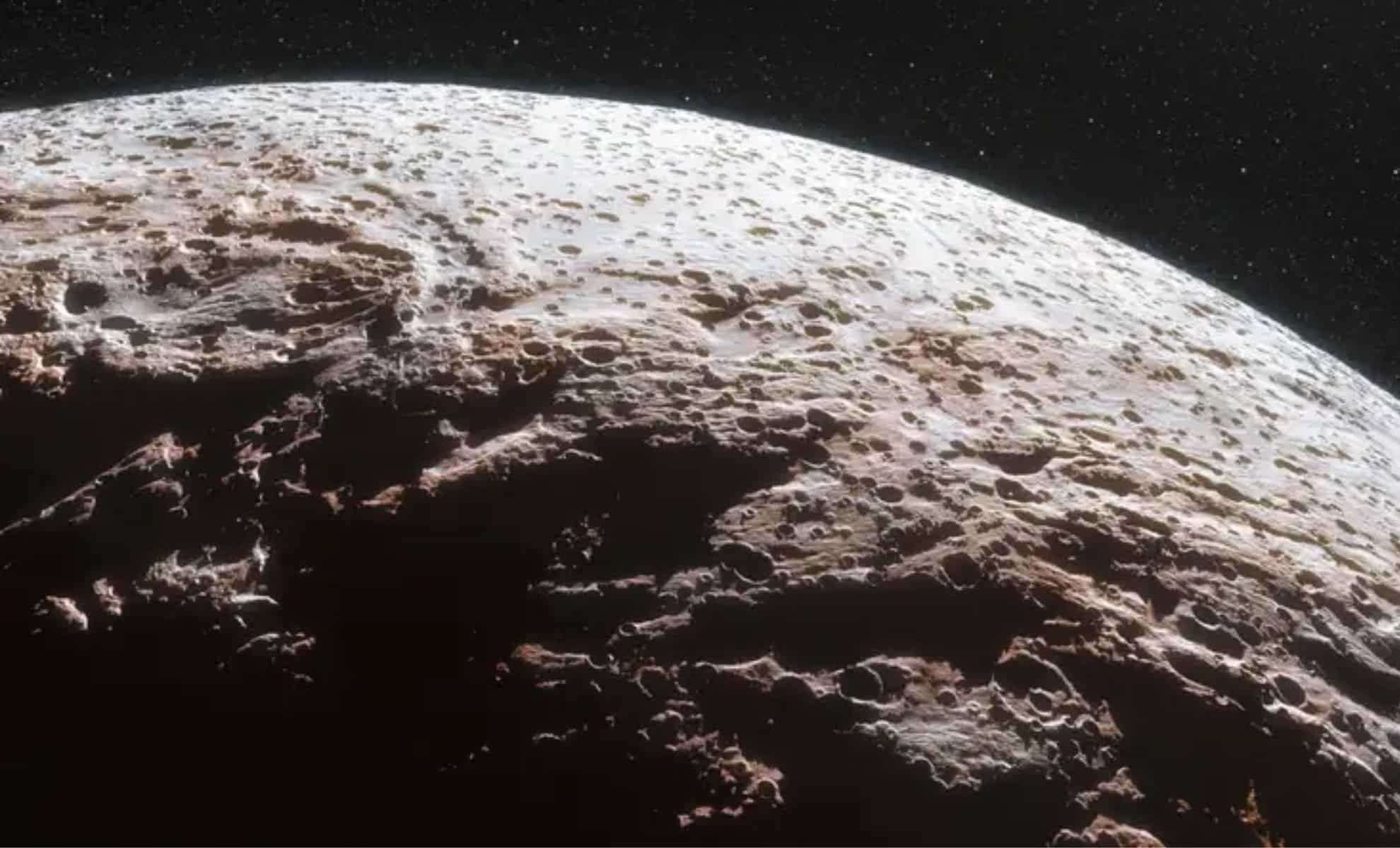
Long considered a frigid, lifeless object on the edge of our solar system, Makemake has now revealed unexpected signs of activity thanks to new data from NASA’s James Webb Space Telescope (JWST). A recent study on arXiv detected clear traces of methane gas above its surface, suggesting this remote dwarf planet might be more dynamic than previously assumed.
The Glow of Methane in Space
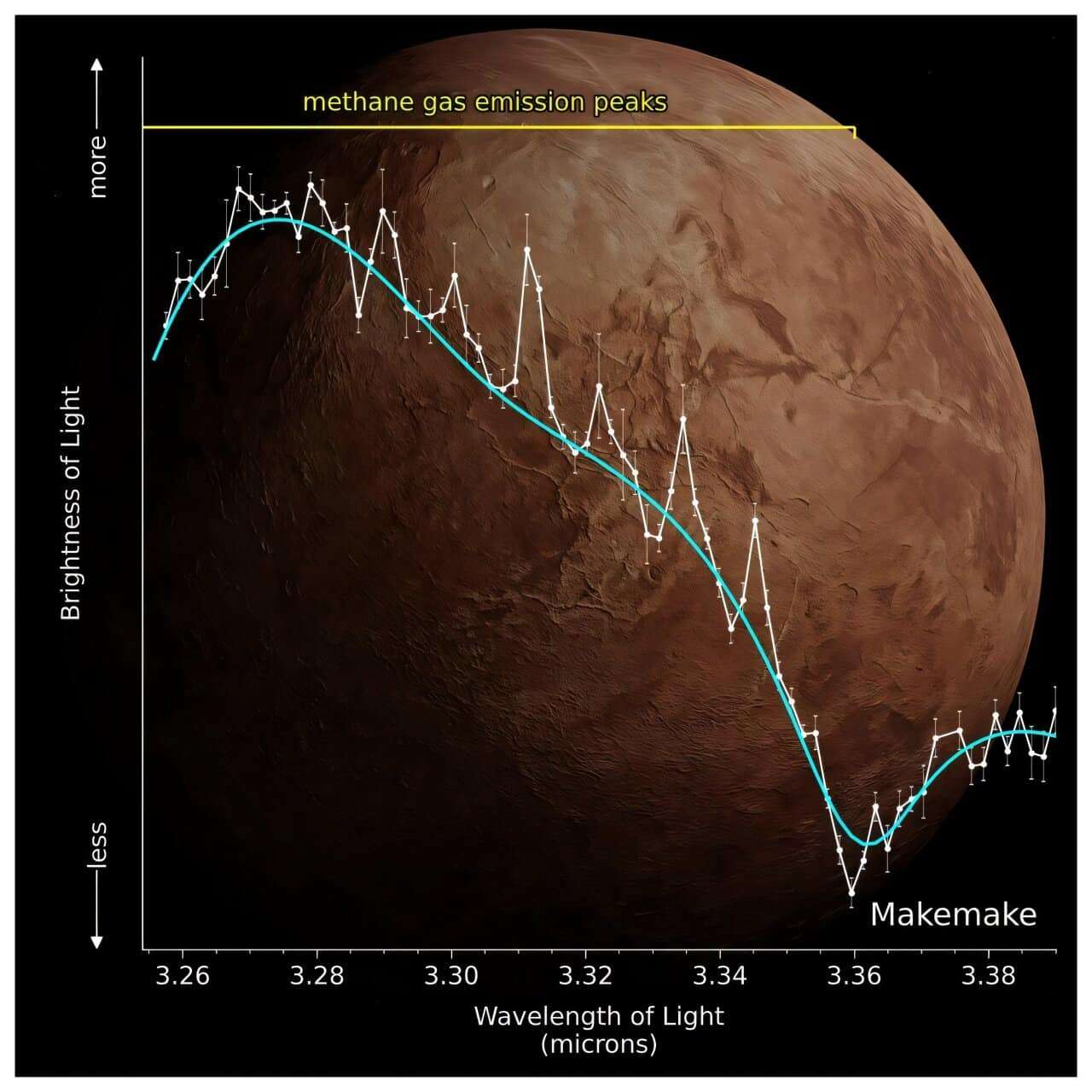
With a diameter of approximately 890 miles—about two-thirds the size of Pluto—Makemake was thought to have almost no atmosphere. But Webb’s infrared sensors have detected faint methane fluorescence caused by sunlight interacting with the gas, indicating the presence of methane molecules suspended above its icy surface.
Lead researcher Sylvia Protopapa from the Southwest Research Institute (SWRI) explained that while methane ice is abundant on Makemake, the discovery of methane in gas form points to active processes where the surface and atmosphere interact continually.

Unraveling the Methane Mystery
The observations open two intriguing possibilities. One hypothesis suggests Makemake hosts a ultra-thin atmosphere similar to Pluto’s, formed as sunlight warms methane frost causing it to sublimate and then refreeze elsewhere. This gas layer would exist at roughly 40 kelvin (–233 °C/–387 °F) and bear an incredibly low pressure, nearly 100 billion times less than Earth's atmospheric pressure at sea level.
Alternatively, methane could be escaping through localized plumes erupting at impressive rates, potentially hundreds of kilograms per second. Such outgassing would be comparable to the geyser activity observed on Enceladus, Saturn’s moon, and exceed the subtle vapor emissions detected on Ceres. Previous thermal measurements hint at warmer spots on Makemake’s surface that might support this venting theory.
A Frozen World of Change
Regardless of the exact cause, the existence of methane gas confirms that Makemake experiences active cycles of ice sublimation and condensation. Like Pluto, Makemake seems capable of shifting ices between solid and gas phases, reshaping its surface and influencing its climate over time. These processes redistribute frost from sunny to shaded regions, subtly modifying the landscape. In the presence of methane plumes, surface deposits might be regularly refreshed, affecting the dwarf planet’s coloration and forming new features.
Ian Wong from the Space Telescope Science Institute emphasized that upcoming higher-resolution Webb observations will be crucial for distinguishing between a tenuous atmosphere and episodic outgassing. Analyzing methane line patterns, pressure data, and detecting possible additional gases like nitrogen or carbon monoxide will help clarify Makemake’s atmospheric nature.
Revealing a Dynamic Remote World
Since its 2005 discovery, Makemake has intrigued astronomers with its bright, reflective surface, reddish tint caused by radiation-altered organic compounds known as tholins, and its small, dark satellite. Despite these features, its atmosphere remained elusive—until now.
Thanks to Webb’s sensitivity to subtle methane fluorescence, scientists now recognize that Makemake is not a dormant iceball but an active world exhibiting surface-atmosphere interactions. This revelation opens the door to further studies on the processes shaping this distant member of our solar system’s family, revealing new layers of complexity in one of the coldest, farthest known worlds.
- Categories:
- News












0 comments
Sign in to Comment