
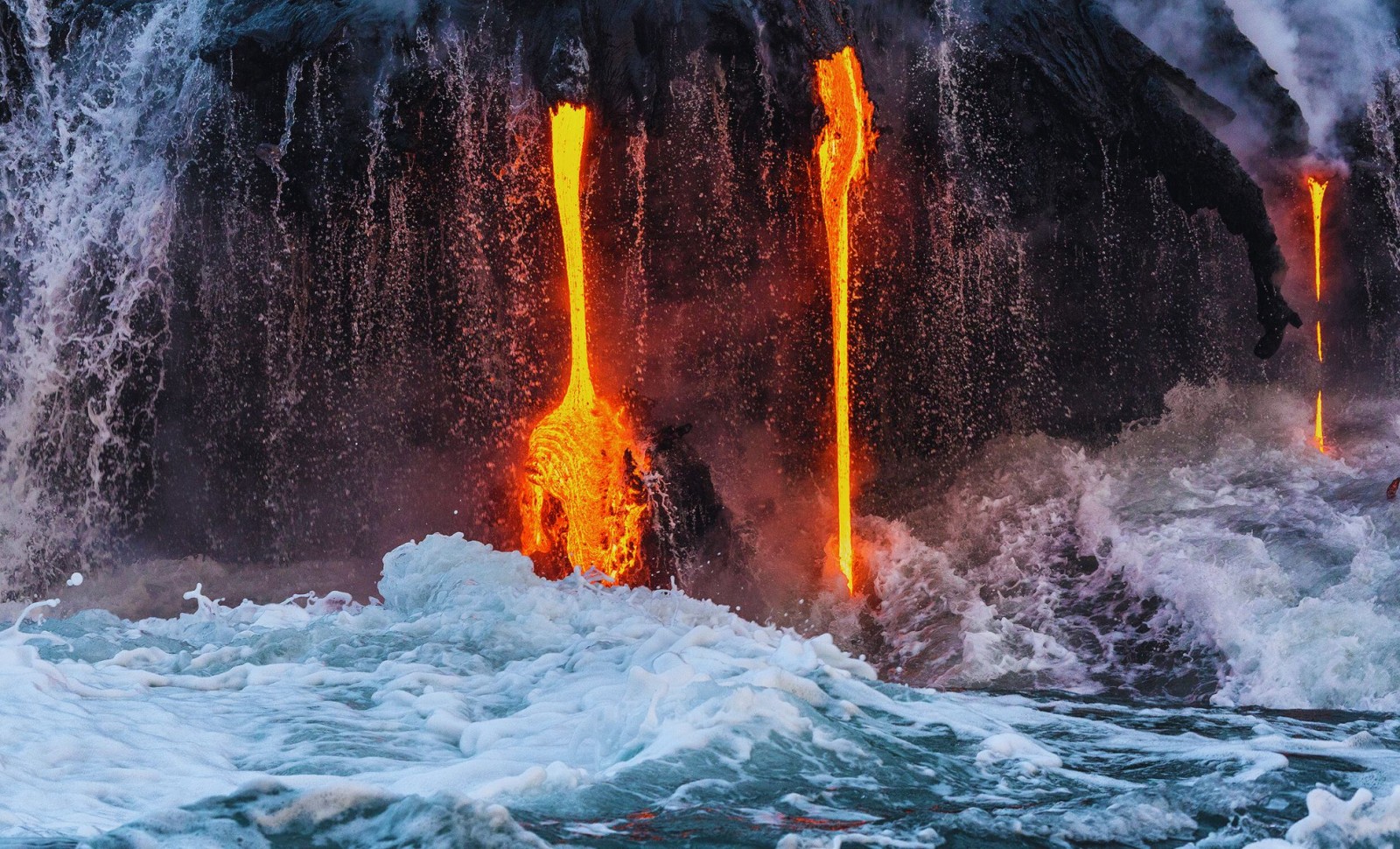
Long before planets developed cooled surfaces or stable atmospheres, water may have been created deep inside them—not delivered by icy comets or distant asteroids, but formed through intense reactions between magma and surrounding hydrogen gas.
A pioneering study conducted by scientists at Carnegie Science has successfully simulated the extreme environments found within early rocky planets. Their findings suggest these planets could internally generate water shortly after their formation.
This phenomenon, long hypothesized by planetary scientists, now has experimental confirmation—a significant advancement beyond theoretical models.

Simulating Planetary Interiors to Solve an Age-Old Question
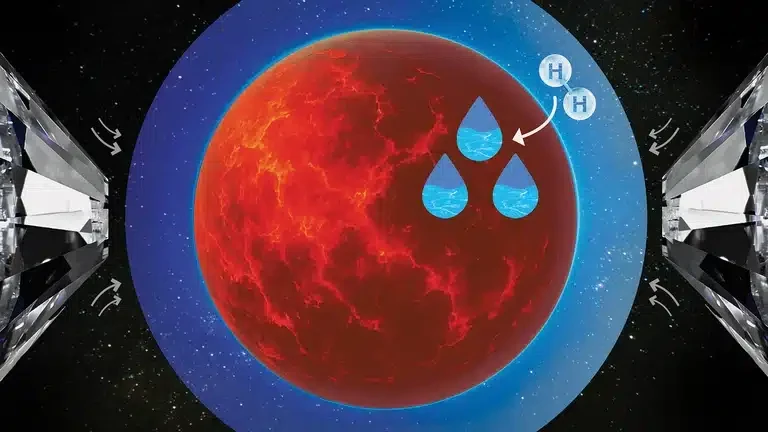
To mimic conditions inside a nascent planet, the team combined molten iron-rich silicate material—representing a magma ocean—with molecular hydrogen gas, which emulates the thick hydrogen envelopes enveloping young rocky planets forming in gas-dense disks.
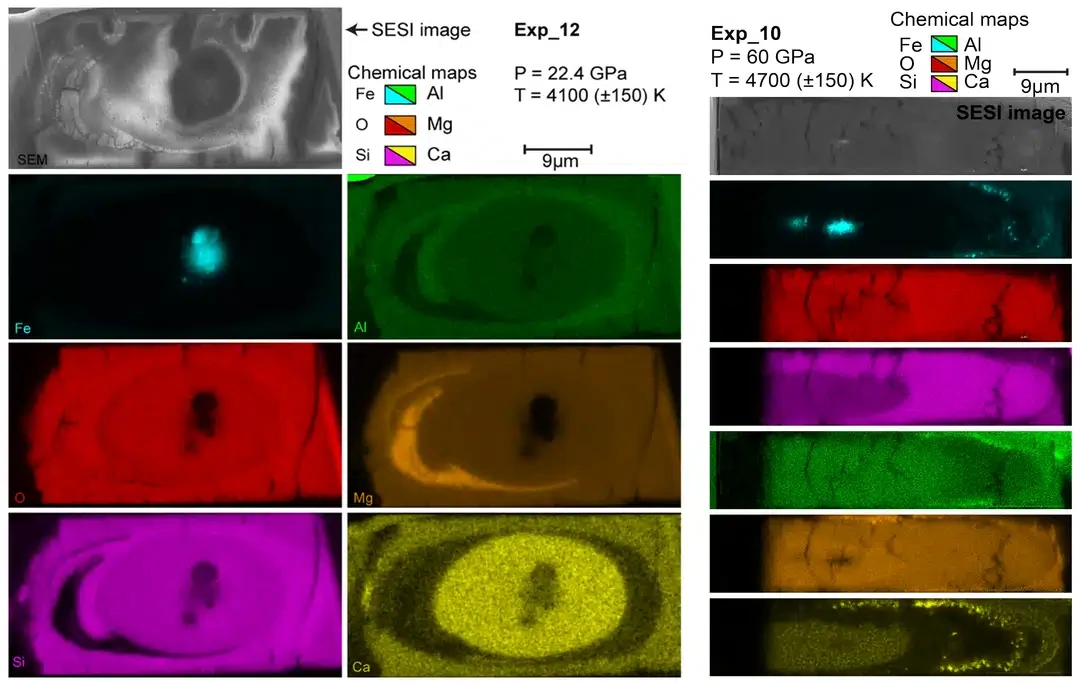
The samples were pressurized to nearly 60 gigapascals (roughly 600,000 times Earth's surface pressure) and heated past 4,000°C. These extreme settings replicate the interior of molten planets shrouded in dense hydrogen atmospheres.
Under these conditions, hydrogen infused into the molten silicate, reacting with iron oxides in the melt to produce water molecules.
“We showed that a copious amount of hydrogen is dissolved into the melt and significant quantities of water are created,” said lead researcher Francesca Miozzi.
The experiments are part of the AEThER project, which unites experts in astronomy, petrology, cosmochemistry, and mineral physics to explore fundamental questions about planet habitability.
Water Generation from Within, Independent of Extraterrestrial Sources
The research provides an alternative explanation to the longstanding debate over Earth’s water origin. Prevailing theories such as cometary delivery or mantle retention do not completely account for Earth's entire water complement. The new findings suggest water may have originated internally during Earth’s earliest stages.
The AEThER team proposes this mechanism applies broadly to rocky planets that start off engulfed in a hydrogen-rich atmosphere and immersed in magma oceans—a scenario that appears quite common.
Hydrogen not only facilitates water formation but also influences the planet’s evolution by altering the density of the molten rock, its cooling rate, and the process by which the core separates from the mantle. These processes ultimately impact the kind of atmosphere a planet retains, if any. Anat Shahar, co-leader of the project, highlighted the broader implications:
“This work demonstrates that large quantities of water are created as a natural consequence of planet formation.” It’s not just a one-off mechanism, it’s potentially foundational.
Implications for Water-Rich Exoplanets Throughout the Galaxy
On a larger cosmic scale, the most frequently detected planets in the Milky Way are sub-Neptunes—rocky worlds initially draped in thick hydrogen atmospheres. Earth.com reports that this water-forming chemistry likely plays a role on many of these planets.
If stellar radiation later strips away the hydrogen envelopes, the remnant planet might resemble a smaller, water-rich super-Earth. The water reservoir would have been created long ago in a molten interior, potentially hidden beneath the surface or contained within minerals. This insight may reshape how astronomers analyze the habitability of exoplanets, recognizing that seemingly dry planets could harbor substantial internal water stores.
- Categories:
- News








0 comments
Sign in to Comment