
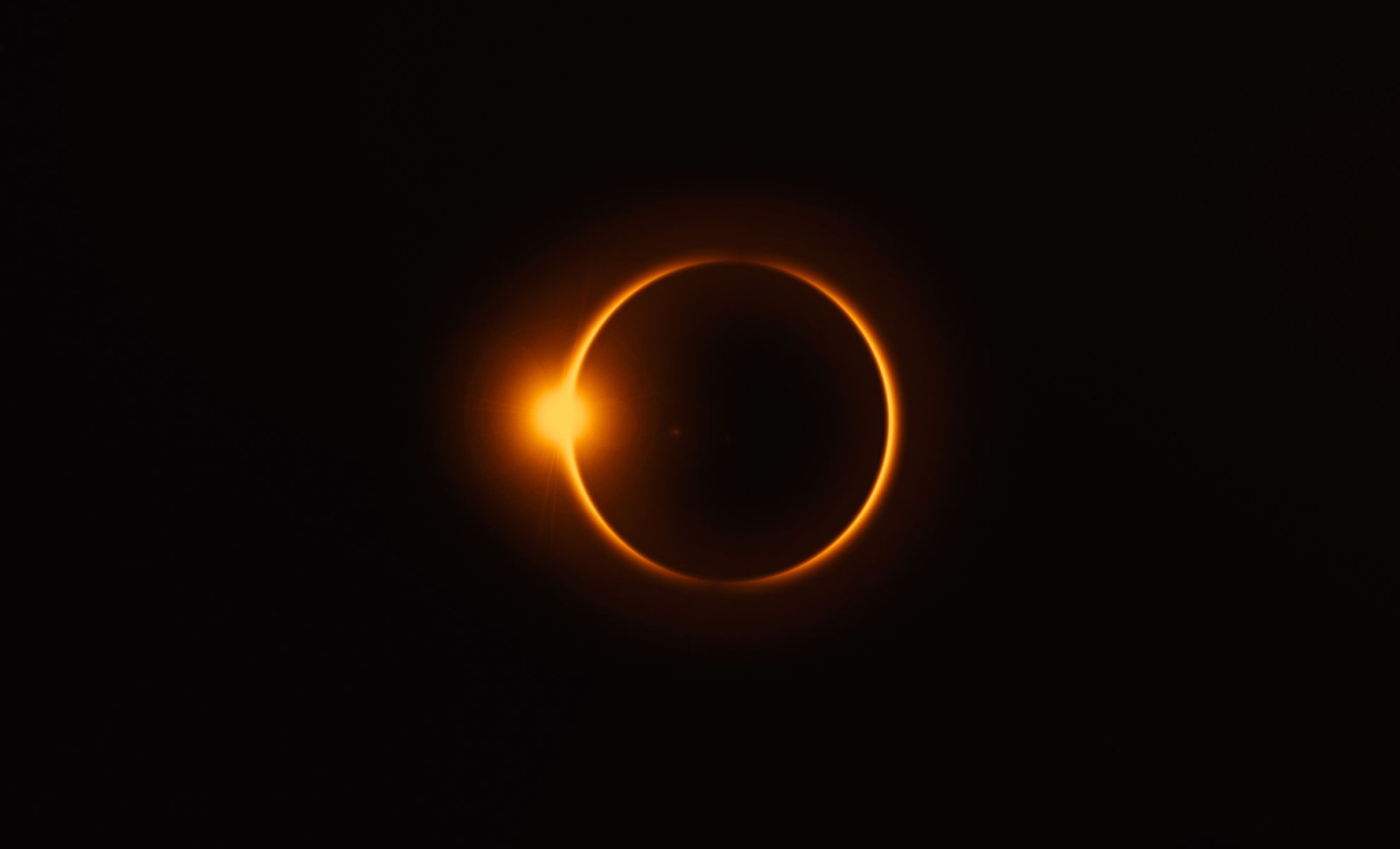
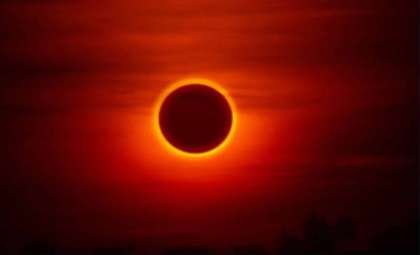
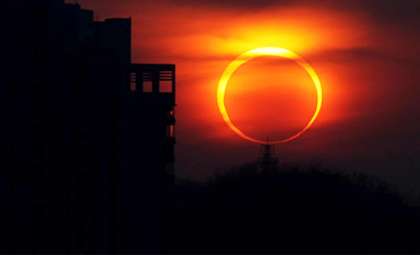
In just a few days, Antarctica will host a stunning annular solar eclipse, creating a blazing “ring of fire” phenomenon in the sky. This celestial event will only be fully observable within a narrow, remote stretch of Antarctica, including a couple of research stations. Partial views, meanwhile, will be available across parts of southern Africa, South America, and adjacent ocean regions.
Due to its remote location and limited viewing corridor, this eclipse will likely remain unseen by the vast majority. However, scientists stationed on the icy continent or explorers aboard select cruise ships could experience a brief yet unforgettable spectacle in one of Earth’s most isolated places.
Antarctica Hosts the Only Annular Eclipse Path
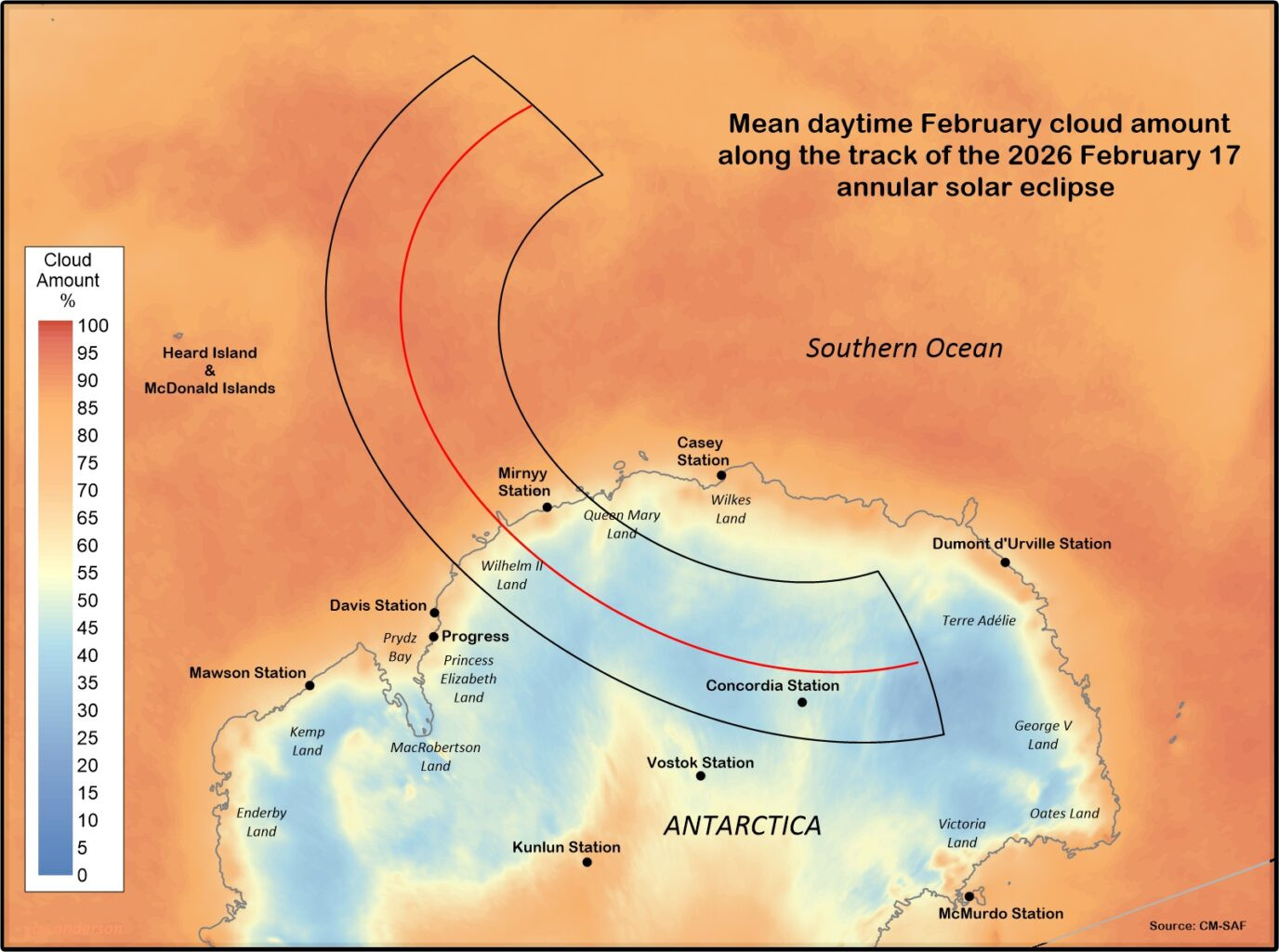
The Moon’s antumbral shadow—where the full annular eclipse appears—will travel along a 2,661-mile stretch of Antarctic land, happening between 11:42 and 12:41 UTC, according to Space.com. Within this thin band, just two inhabited sites lie: Concordia Station, a French-Italian research base, and Mirny Station, managed by Russia.

At Concordia Station, the annular phase will last about 2 minutes and 1 second, with the Sun sitting approximately 5 degrees above the horizon. Mirny Station will see annularity for 1 minute and 52 seconds, with the Sun a bit higher at 10 degrees. Outside these scientific bases, there are no populated areas or tourist facilities, making visits extremely challenging. Eclipse expert Jay Anderson pointed out:
“It’s a challenge to reach and there are only two inhabited locations within the annular shadow, neither of which is set up to welcome tourists.”
Partial Eclipse Visible Across Wider Area
Although the ring of fire itself remains confined to Antarctica, a partial eclipse will be observable over a far broader region. This includes several Antarctic research installations, portions of southeastern Africa, the southern tip of South America, and broad sections of the Pacific, Atlantic, and Indian Oceans.
Space.com provides details on anticipated eclipse visibility: A.B. Dobrowolski Station (Poland) will witness approximately 92% solar coverage; McMurdo Station (USA) about 86%; and Durban, South Africa roughly 16%. Even distant locations such as Port Louis (Mauritius) and Ushuaia (Argentina) are expected to observe a slight solar obscuration, generally below 10%. This data covers over a dozen stations and cities experiencing some level of the partial eclipse.
Weather Conditions Could Affect Viewing
According to Eclipsophile.com, the chances of clear skies along much of Antarctica’s coast in February are low. Mirny Station typically experiences about 65% cloud cover, while Concordia sees relatively clearer skies with around 35% cloudiness during the same month.
An interesting but uncertain phenomenon is the cooling caused by the eclipse, which can alter local cloud development. Space.com highlights that this cooling may lead to reduced convective cloud formation, occasionally enhancing visibility. Nevertheless, with temperatures plunging as low as -112°F (-80°C) in some areas, eclipse watchers will need to endure harsh conditions to witness this extraordinary event.
- Categories:
- Astronomy






0 comments
Sign in to Comment