
Researchers have identified erythrulose, a sugar molecule consisting of four carbon atoms, within a massive interstellar cloud near the Milky Way's center. This marks the inaugural detection of a sugar of this kind in the expanse between stars.
The breakthrough comes courtesy of a research team led by Izaskun Jimenez-Serra, with findings shared on the arXiv preprint platform. Although space often seems void, decades of research reveal that dense molecular clouds host a wealth of organic substances.
These compounds are key to understanding prebiotic chemistry, as many resemble molecules linked to the origins of life on Earth. The discovery of this sugar adds a new piece to that puzzle but also introduces new questions for scientists to explore.

Unprecedented Detection in Molecular Clouds
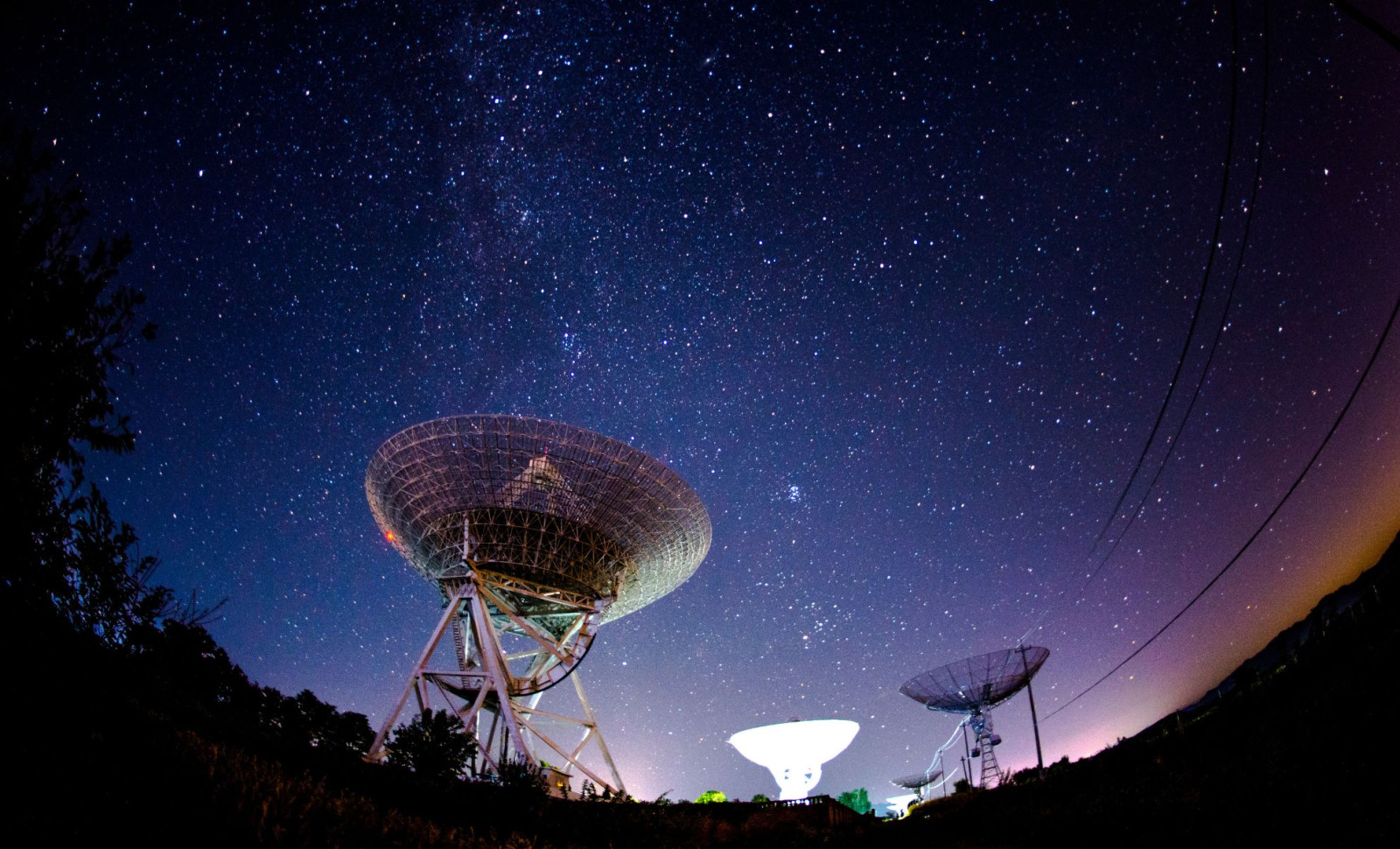
The sugar was identified in G+0.693-0.027, a molecular cloud known among astronomers for its complex chemistry. Scientists employed the sensitive capabilities of both the 40-meter Yebes telescope and the 30-meter IRAM telescope to spot the faint radio emissions produced by molecules drifting in space.
The team's analysis involved meticulously sifting through a dense array of spectral data until the characteristic signals of erythrulose emerged. Statistical estimates placed the chance of a false positive at just 0.2%, confirming the molecule's presence.

Classified as a ketose sugar, erythrulose contains four carbon atoms. While other intricate organic molecules have been detected in molecular clouds, this constitutes the first solid identification of a four-carbon sugar in such an environment.
Unexpected Absence of Smaller Sugars
Aside from locating erythrulose, researchers were fascinated by the scarcity of three-carbon sugars in the cloud. Typically, molecules like glyceraldehyde are believed to be essential precursors in the formation of longer sugar chains. However, erythrulose was found to be over eight times more prevalent than these smaller sugars.
To uncover the mechanisms behind this anomaly, the team conducted sophisticated computational simulations. The results suggest a novel pathway for sugar synthesis.
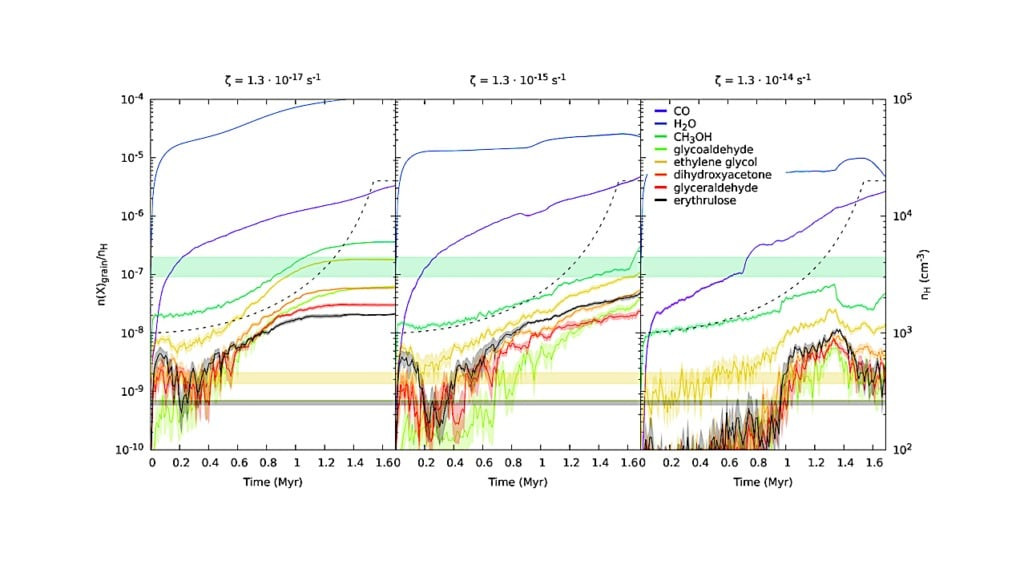
Rather than assembling carbon atoms sequentially, erythrulose appears to form when smaller two-carbon molecules combine on the icy surfaces of tiny dust grains that float through space. These particles undergo continuous bombardment by cosmic rays and atomic hydrogen, fostering highly reactive conditions conducive to molecule creation. This process implies that a four-carbon sugar might form directly, bypassing the expected three-carbon intermediate stage.
Implications for the Origins of Life on Earth
This breakthrough has significant implications for understanding life's beginnings. Modern organisms rely on DNA and RNA to store genetic data, both incorporating ribose, a sugar with five carbon atoms. However, ribose formation under plausible early Earth conditions is challenging, leading to speculation that earlier genetic systems may have been built on alternative sugars.
One candidate is Threose Nucleic Acid (TNA), which utilizes a simpler four-carbon sugar called threose. The study points out that ketose sugars like erythrulose can transform into aldose sugars such as threose when exposed to liquid water.
This connection makes the presence of erythrulose particularly compelling, as it establishes a direct chemical link to molecules speculated to precede contemporary genetic material. The researchers also highlight that numerous organic molecules could have been delivered to Earth during the Late Heavy Bombardment when the early planet experienced frequent cosmic impacts.
- Categories:
- Science






0 comments
Sign in to Comment