
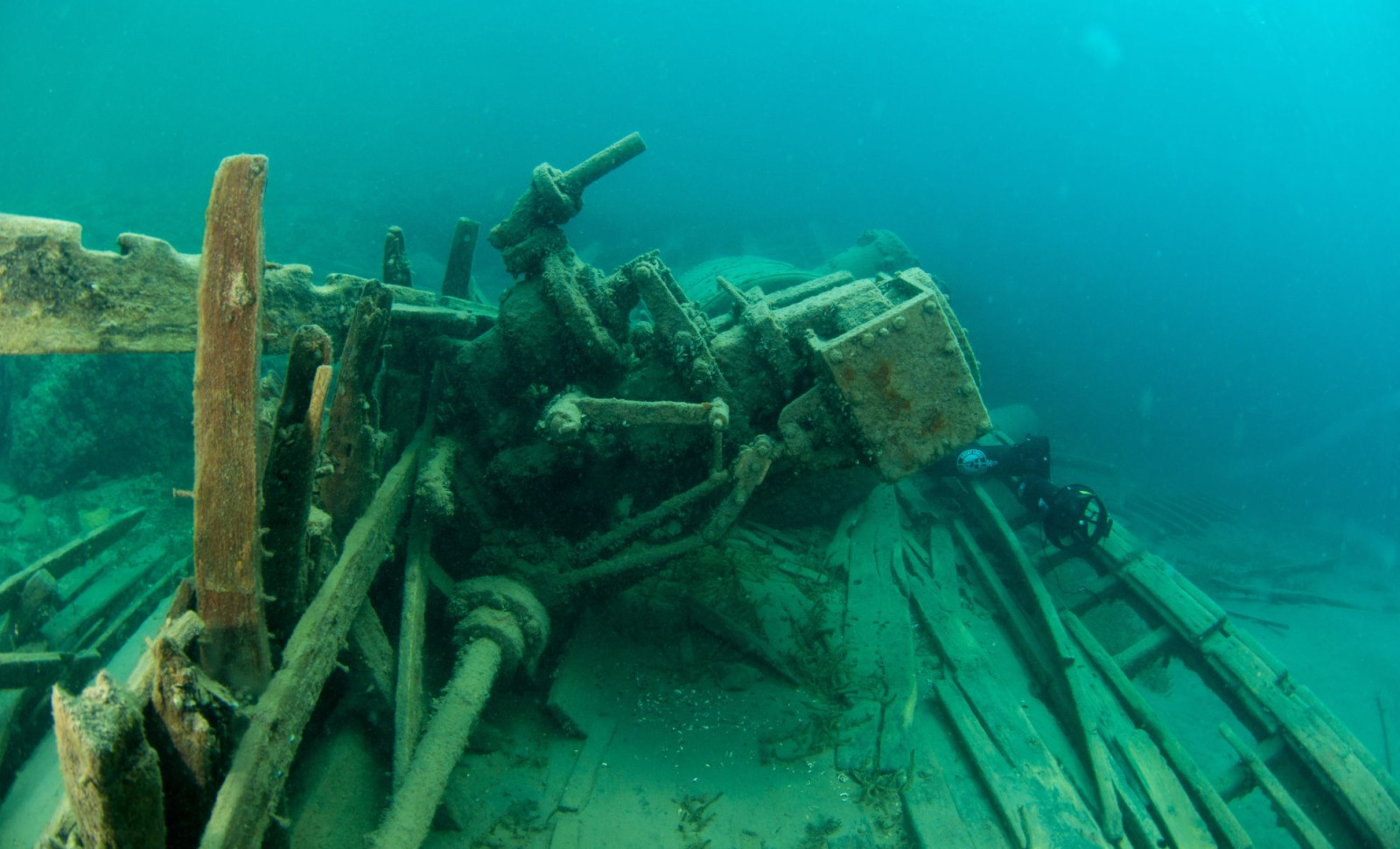
In December 1872, the merchant vessel Mary Celeste was discovered adrift in the middle of the Atlantic Ocean with its crew nowhere to be found. Despite being fully intact and well-stocked, the entire complement had disappeared under circumstances that continue to baffle investigators over a century later.
The strange find quickly captured public attention due to the unusual nature of the incident. It was unprecedented for a merchant ship sailing a major commercial route to be deserted without an apparent cause, making this case particularly intriguing.
During an era when maritime activities were heavily monitored along the busy Atlantic lanes, the Mary Celeste stood out not for damage or catastrophe, but rather because everything aboard seemed normal—except for the absence of personnel.

The Ship Found Intact, with Its Contents Undisturbed
On December 4, 1872, the Canadian schooner Dei Gratia encountered the mystery vessel about 400 miles east of the Azores. According to Smithsonian Magazine, the Mary Celeste remained remarkably “seaworthy” despite drifting aimlessly. Its cargo included 1,701 barrels of industrial alcohol, alongside sufficient provisions like food and water, all left untouched.
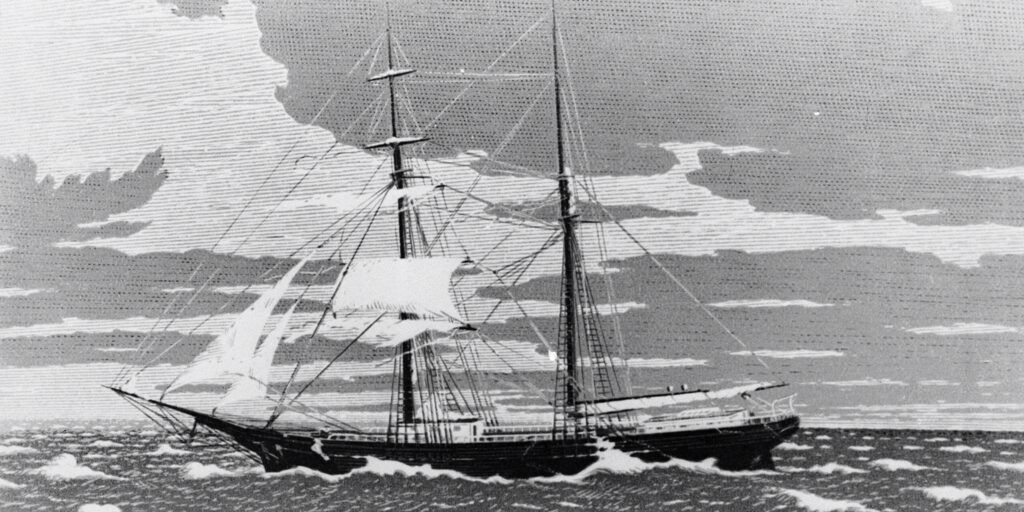
Captain Benjamin Spooner Briggs had embarked from New York accompanied by his wife, their toddler daughter, and seven crew members. The ship’s logbook last recorded an entry on November 25, after which all records ceased. Although no signs of attack or chaos were evident, one puzzling clue was the missing lifeboat, indicating the crew had intentionally left the vessel at some stage.
Theories that Emerged Soon After
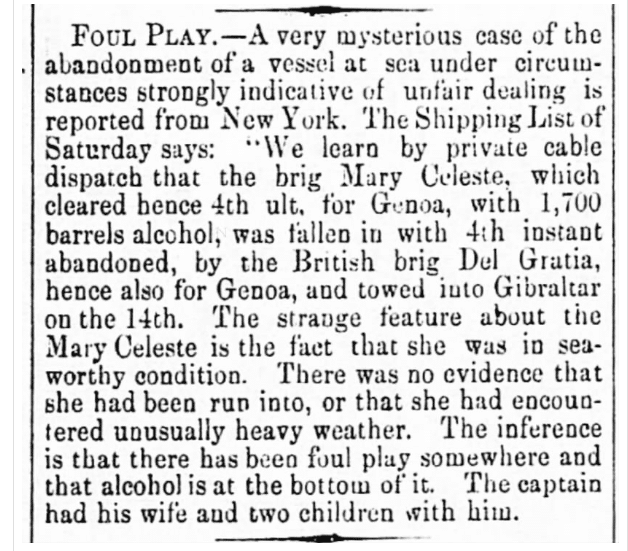
With limited clues available, speculation soared. As highlighted in the Alexandria Gazette, the situation seemed “strongly indicative of unfair dealing,” suggesting “foul play,” especially linking the incident to the ship’s flammable cargo.
As time passed, the mystery transcended journalism. Notably, Arthur Conan Doyle penned a fictionalized account called J. Habakuk Jephson’s Statement, introducing a survivor and a dramatic narrative. Although fictional, it shaped public imagination around the unresolved mystery.
Official Inquiries Left Questions Unanswered
Upon reaching Gibraltar, British investigators launched a thorough examination. Historical documentation reveals piracy and violent acts were dismissed, yet the cause behind the crew’s disappearance remained unresolved. An anomaly further perplexed officials.
“It appears almost impossible that the derelict should have compassed within that time such a distance at all events on the starboard tack, upon which she was met by the ‘Dei Gratia,’ when the log of the latter shows that the wind was blowing from the north all that time, and that she was on the port tack all the time,” explained the researchers.
Later hypotheses, featured in a Smithsonian Channel documentary, propose Captain Briggs might have feared a catastrophic explosion from alcohol fumes or suspected a leak due to malfunctioning pumps. While plausible, no definitive proof exists for these scenarios.
The whereabouts of the ten individuals aboard the Mary Celeste were never uncovered. This enduring maritime enigma is one where all known facts are available, yet the true tale behind them remains elusive.
- Categories:
- News








0 comments
Sign in to Comment