
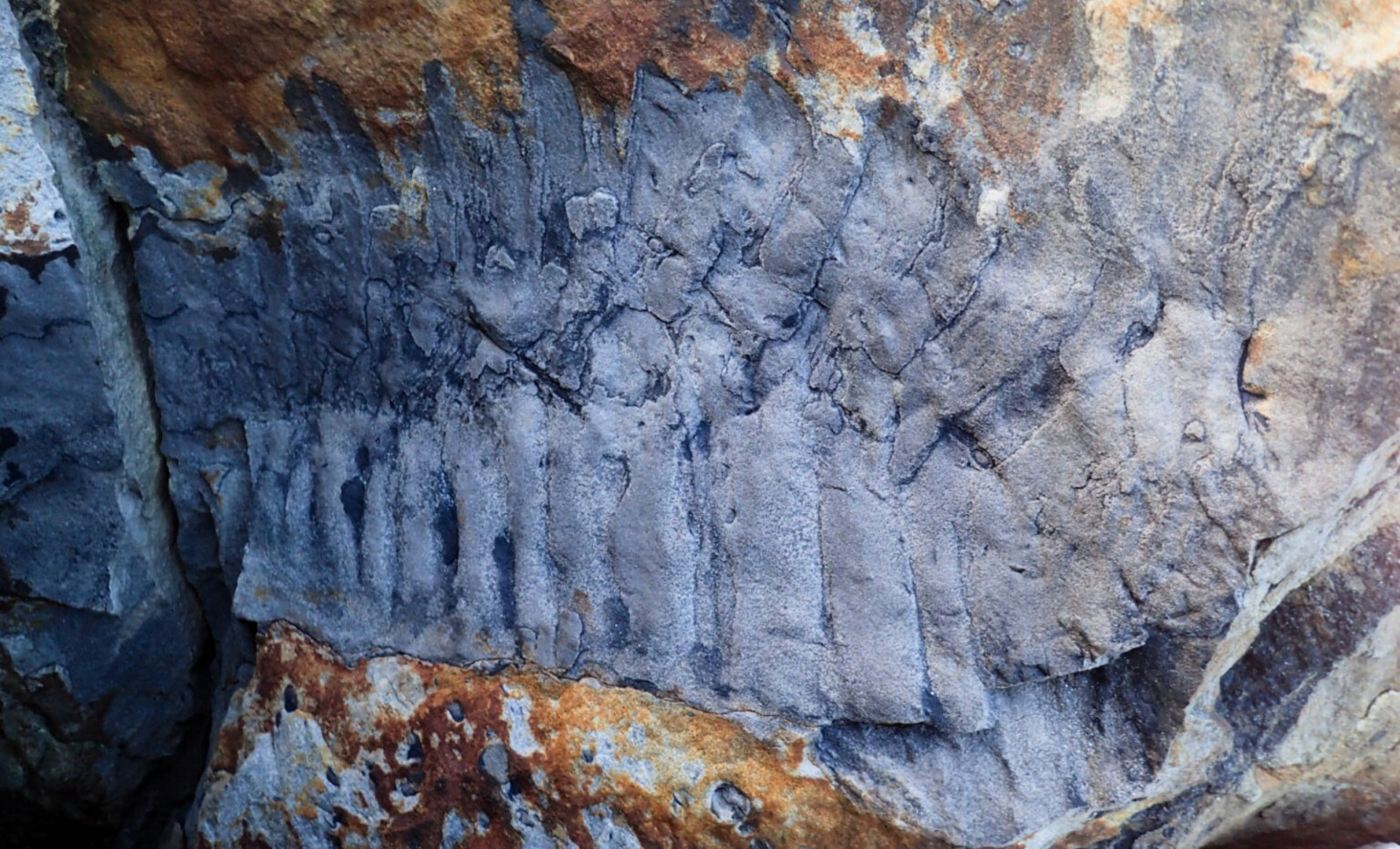
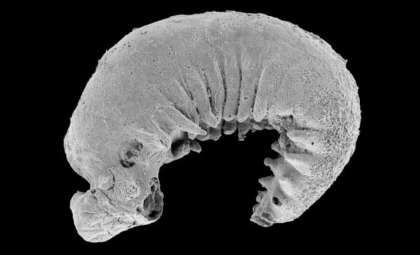
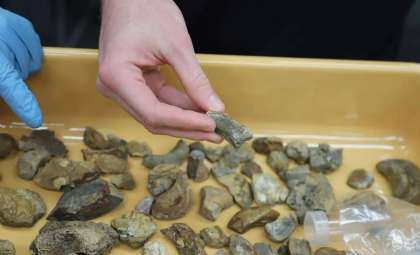
Although measuring just 4 centimeters, far smaller than its gigantism-implying reputation, this fossil from Montceau-les-Mines in France has unlocked key insights into the ancient arthropod Arthropleura. For over 150 years, paleontologists had only partial clues from body fragments and fossilized tracks, with the crucial front anatomy remaining a mystery.
Research published on October 9, 2024, in Science Advances brought new understanding. Lead investigator Mickaël Lhéritier and his team used advanced imaging techniques on Carboniferous fossils embedded in rock. The ancient site of Montceau-les-Mines, now submerged under an artificial lake, was once a tropical swamp near the equator.
The significance lies in Arthropleura’s extraordinary nature. Researchers estimate it thrived between roughly 345 and 290 million years ago across Europe and North America. The largest specimens measured approximately 2.6 to 3.2 meters long and weighed near 50 kilograms, as noted in detailed coverage by SciencePost.

Unlocking Secrets Preserved in Stone
The challenge was not a shortage of fossils, but their fragmented and incomplete condition. Since 1854, Arthropleura had been recognized mainly through isolated segments and fossilized trackways. Such remains confirmed the existence of a giant land-dwelling arthropod but revealed little about its morphology, diet, or evolutionary classification.
Initial attempts with standard tomography at a university lab failed to achieve the fine detail necessary for observing the head’s delicate structures. The team then utilized resources at the ESRF, the European Synchrotron Radiation Facility in Grenoble, applying a multi-scale imaging method that penetrated the fossil-bearing nodule. Author Vincent Fernandez explained that their process began with low-resolution scans, followed by zoomed-in examination of promising areas.
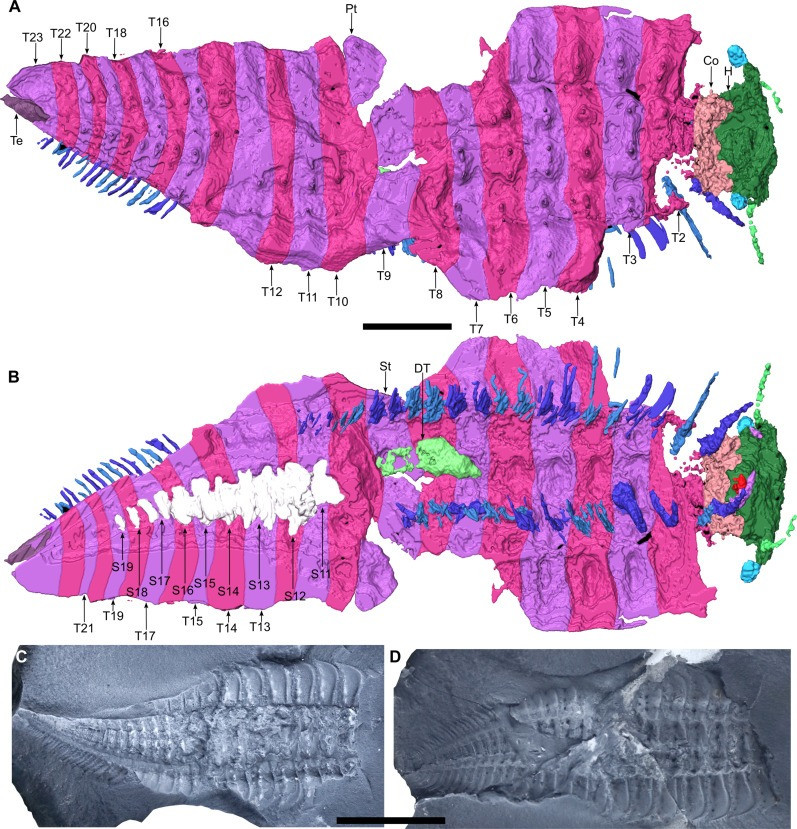
This shift in scale unveiled anatomical features never before linked to Arthropleura. The team identified mouthparts, antennae, and internal components long concealed within the mineral matrix. For the first time, the colossal creature had a face.
An Unanticipated Head Structure
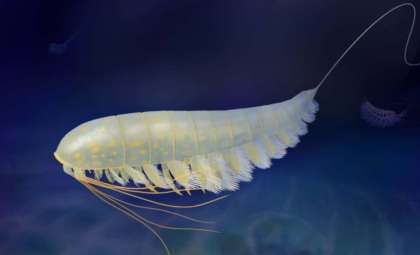
The three-dimensional reconstruction revealed a front section that combined surprising features. The head was nearly circular with delicate antennae and stalked eyes. Below these sat a pair of mandibles and two pairs of feeding limbs called maxillae.
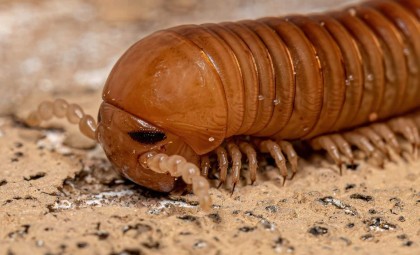
However, the anatomy presented complexities. Some feeding parts resembled those found in centipedes, predatory members of the chilopod category still living today. Conversely, the body exhibited characteristics akin to millipedes, including two pairs of legs per segment and a morphology inconsistent with a swift predator.
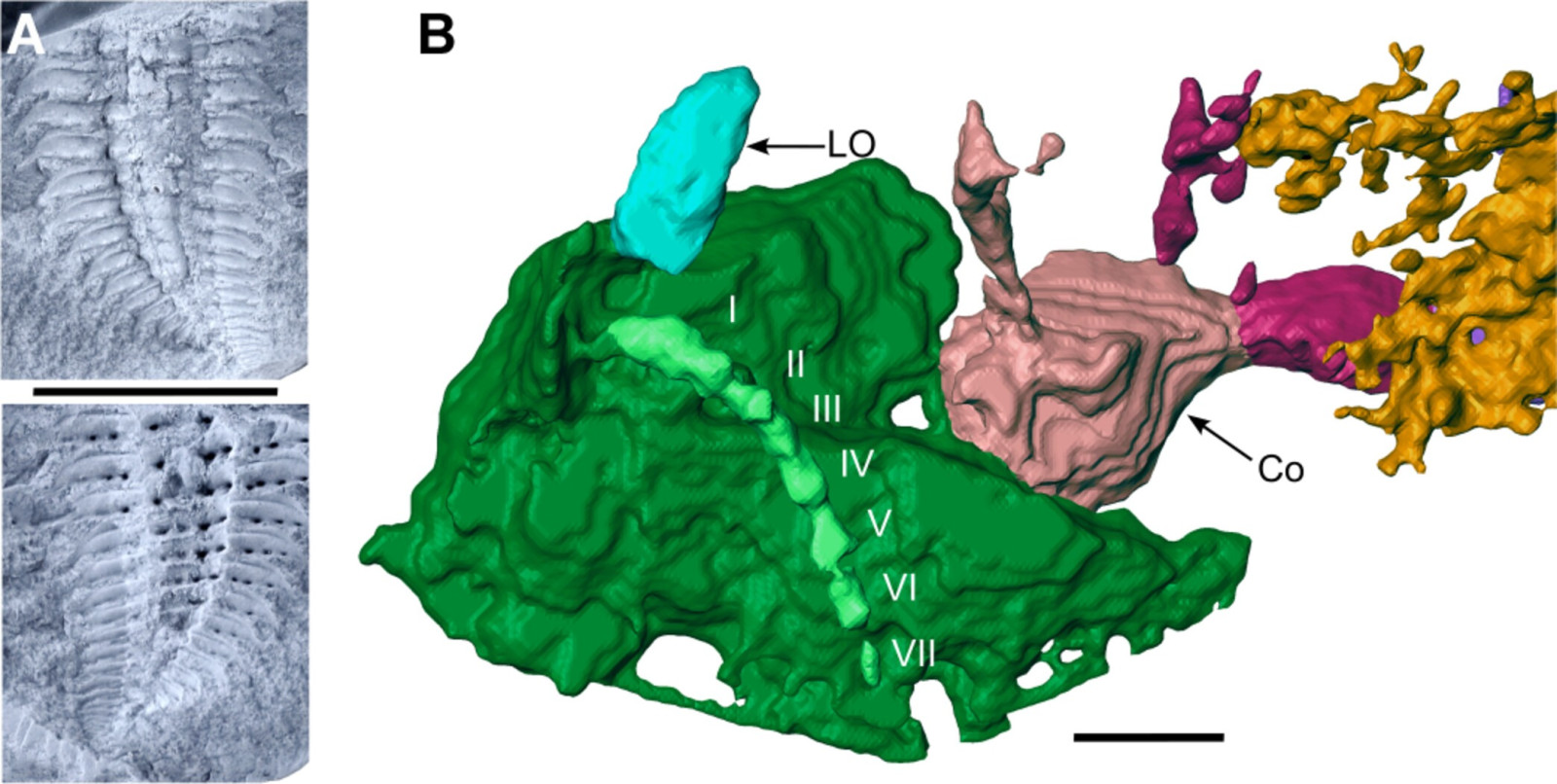
The study’s abstract on PubMed emphasized this dual nature: Arthropleura shared traits with both millipedes and centipedes. This duality explains why classifying the giant arthropod proved so challenging. Without a preserved head, every fossil added complexity but little clarity.
Rethinking Arthropleura's Role in Its Ecosystem
The newly captured images dispute the longstanding perception of Arthropleura as a fearsome predator roaming Carboniferous wetlands. Despite some predatory-like features, it lacked venomous forcipules—specialized grasping appendages used by modern centipedes for hunting.
The overall body anatomy supports this interpretation. With short legs and an apparently slow-moving lifestyle, the animal was likely not built for high-speed predation. The researchers propose Arthropleura was instead a detritivore, subsisting on decomposing plant materials on the forest floor.
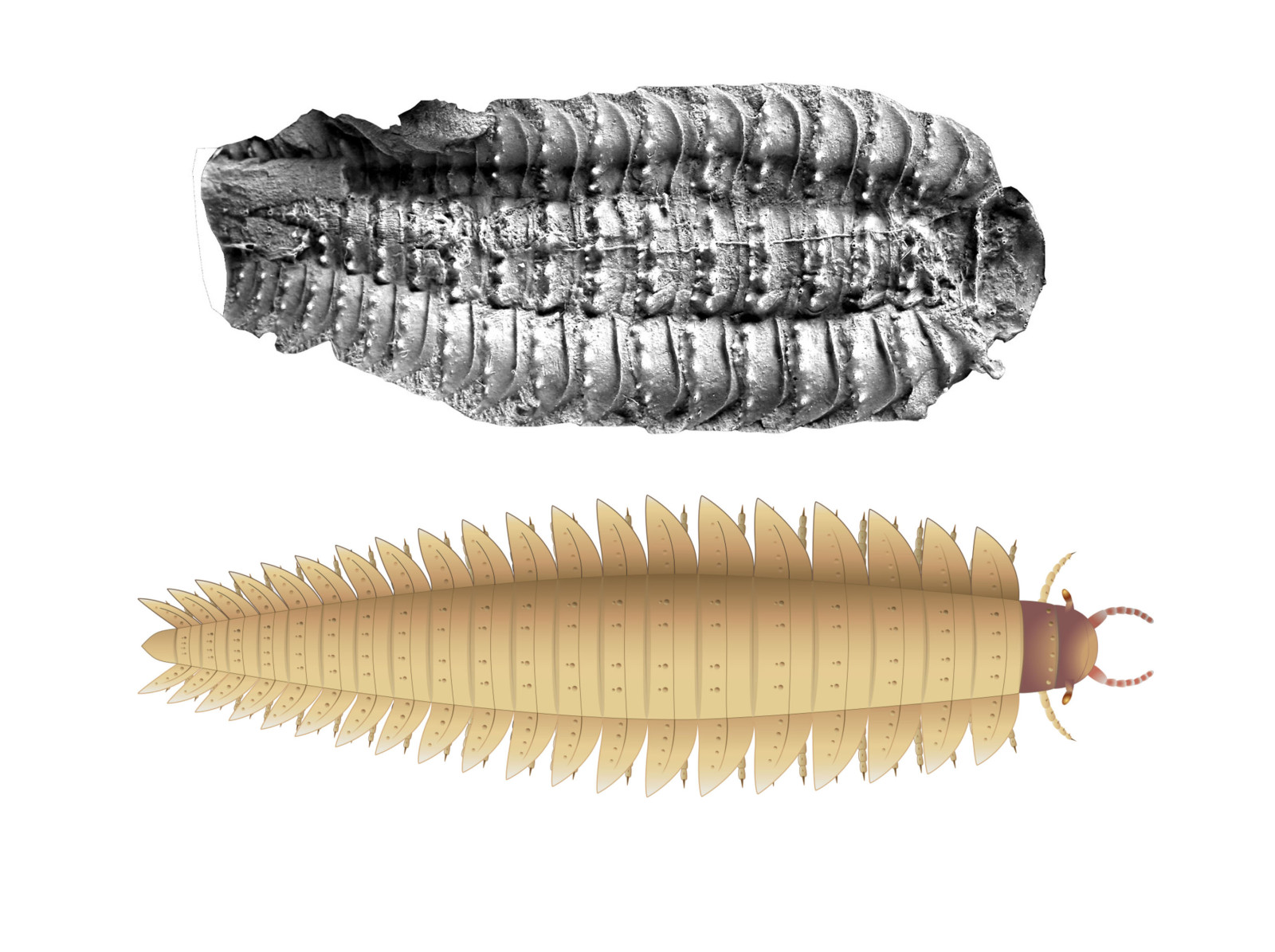
This discovery reshapes our understanding of these ancient ecosystems. Arthropleura likely functioned as a large-scale recycler, slowly consuming organic detritus amid the wet Carboniferous forests. The specimens examined were juveniles but exhibited segmentation patterns hinting at growth through successive molts with segments and leg pairs added over time.
Pinpointing Arthropleura’s Place on the Evolutionary Tree
The investigation extended beyond anatomy. The researchers integrated morphological findings with phylogenetic analysis using transcriptomic data to refine Arthropleura’s position among myriapods. Results indicate it was a stem-lineage relative closely allied to millipedes, yet retaining characteristics linking it to the broader millipede-centipede lineage.
Thus, the newly uncovered head did more than personalize Arthropleura—it bridged anatomical gaps between ancient groups whose relationships were previously inferred primarily from molecular data of modern species. This makes the approximately 305-million-year-old fossil uniquely valuable since it retains a mixture of traits no current species displays.
Moving forward, the team aims to revisit the vast collection of over 100,000 fossils excavated from Montceau-les-Mines before its flooding. Other Carboniferous arthropods preserved there may yield additional insights into this primeval ecosystem. At least for Arthropleura, the once blank front of the creature’s body now reveals its identity.
- Categories:
- Science





0 comments
Sign in to Comment