
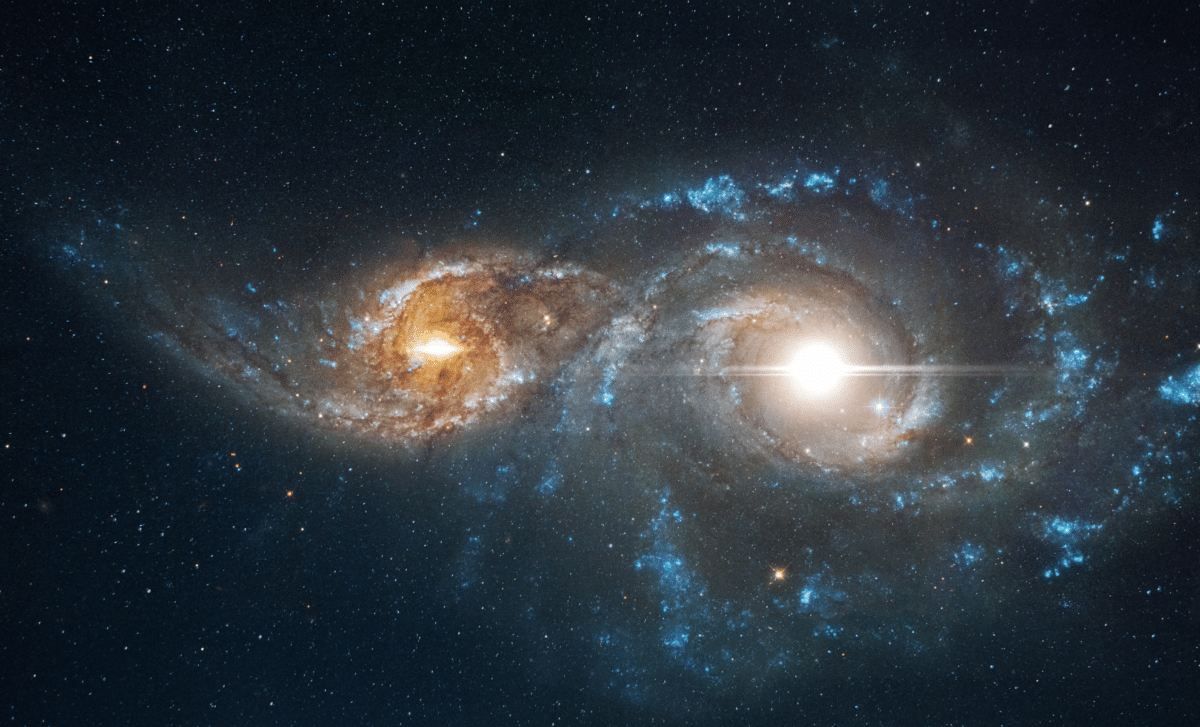
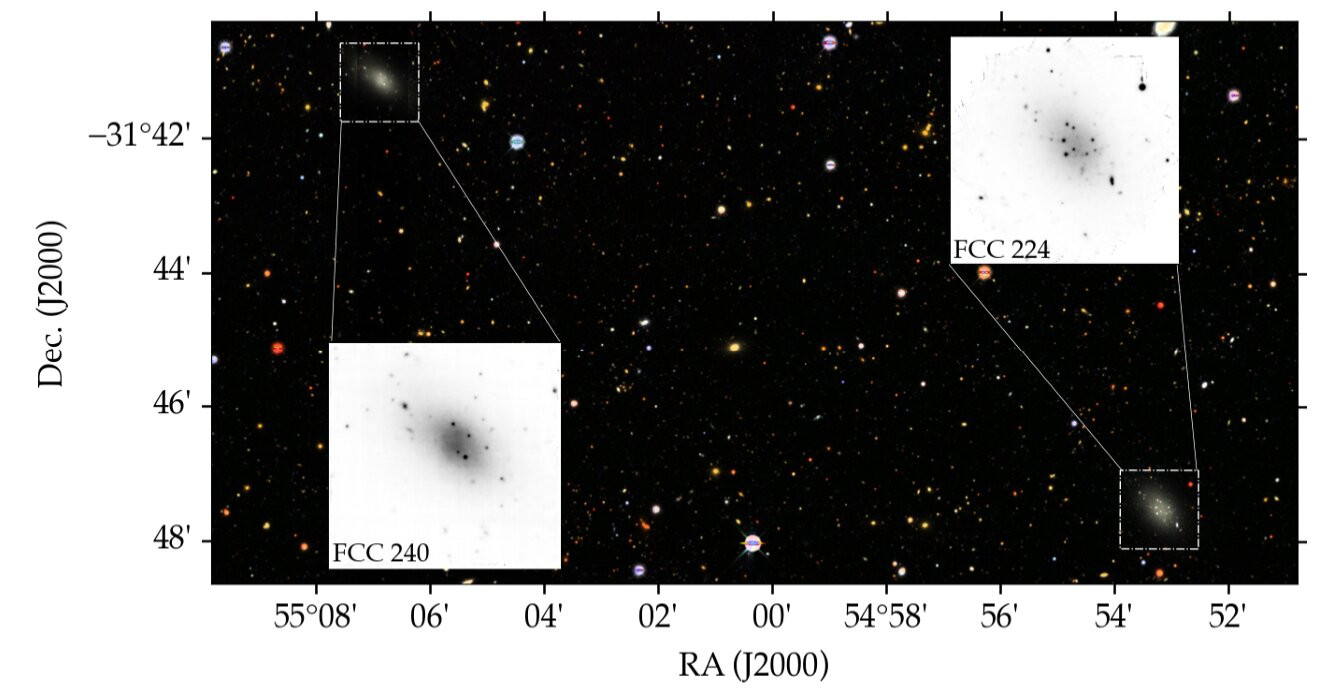
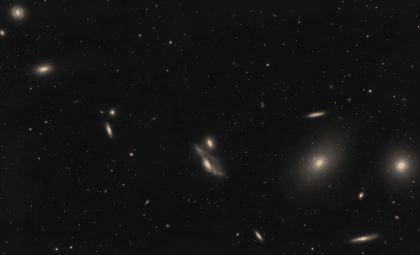
A team of astronomers has identified an extraordinary pair of galaxies that appear almost entirely free of dark matter, posing significant questions about current galaxy formation models. Their study, hosted on the arXiv preprint archive, highlights FCC 224 and FCC 240—two ultra-diffuse galaxies located at the fringes of the Fornax Cluster. The characteristics of these galaxies hint at a turbulent and unique creation process, shedding new light on the puzzling nature of cosmic structures.
Ultra-Diffuse Galaxies Without Dark Matter Defy Norms
Ultra-diffuse galaxies (UDGs) are extremely faint, expansive star systems roughly matching the size of the Milky Way but containing far fewer stars. While many UDGs are rich in dark matter, suggesting they are "failed" galaxies that didn’t develop many stars, a rare group seemingly lacks dark matter almost entirely. FCC 224 and FCC 240 belong to this curious subset. Observations using the Multi Unit Spectroscopic Explorer (MUSE) on the Very Large Telescope demonstrated that the stellar and globular cluster motions in both galaxies are extremely slow, indicating their inner gravitational pull primarily arises from the visible stars. Their combined dynamical and stellar masses within the half-light radius closely align, which is notably less than what is typical for dwarf galaxies. This reduced velocity dispersion categorizes them among the most unusual cosmic entities ever recorded.
Indications of a Catastrophic Formation Event
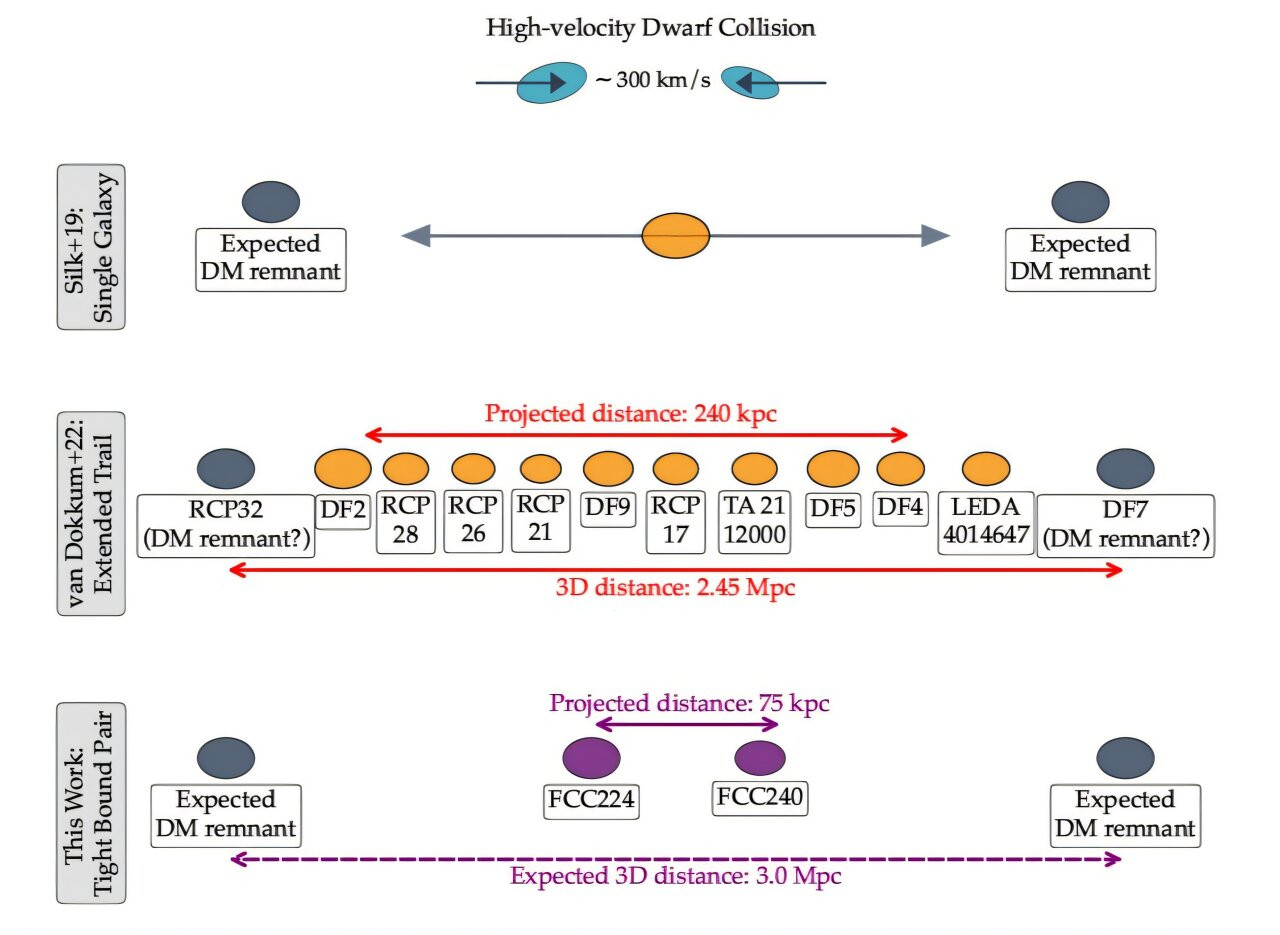
The galaxy duo also showcases globular clusters with unusually high brightness, resembling those observed in the known dark matter-poor galaxies DF2 and DF4. FCC 224 and FCC 240 share similar ages—about ten billion years—and their clusters match the metallicity and formation timeline of their stars. Scientists suggest these traits align strongly with the bullet-dwarf collision model, where two dwarf galaxies slam together at tremendous speeds, causing the stars to be stripped from their dark matter. This violent interaction sparks a rapid, intense phase of star creation, leading to both the diffuse galaxy forms and oversized globular clusters concurrently.

“Taken together, these results suggest that FCC 224 and FCC 240 may have formed in a high-velocity collision similar to the event proposed for DF2 and DF4,” the researchers conclude.
Contrasting the New Galactic Twins with DF2 and DF4
In contrast to DF2 and DF4, which lie roughly 240 kiloparsecs apart within a scattered debris chain, FCC 224 and FCC 240 are only about 75 kiloparsecs apart and approaching one another at approximately 16 kilometers per second. This proximity implies a stable, long-term gravitational relationship rather than a dispersed cluster of fragments. Despite the difference in separation distances, astronomers theorize both galaxy pairs may have undergone similar high-speed collisions with slight variations in their orbital paths, resulting in either an extended debris trail or a closely bound system. This opens up the possibility that dark matter-deficient galaxies are not mere exceptions but part of a more widespread galactic evolutionary process.
Hunting for Dark Matter Leftovers
Researchers estimate that remnants of dark matter from the original collision might be located approximately three megaparsecs away along the predicted axis. These possible leftovers present promising targets for future observation efforts that may uncover more debris or ejected dark matter halos. Extensive follow-up studies will be essential to clarify whether FCC 224 and FCC 240 originated independently or share a violent genesis. The data, now accessible through the arXiv repository, provide compelling evidence that extreme, fast galactic collisions could play a pivotal role in shaping galaxies in unexpected ways.
- Categories:
- Astronomy




0 comments
Sign in to Comment