
Researchers examining sulfate-laden regions on Mars have potentially uncovered a previously undiscovered mineral embedded within sediment layers close to the immense canyon Valles Marineris. Through the integration of remote sensing data and controlled lab tests, scientists identified unique spectral features matching a rare iron sulfate compound.
Sulfate minerals frequently appear on Mars, typically forming as water evaporates and leaves behind distinctive chemical deposits in Martian soils and rocks. Due to the arid surface conditions persisting for billions of years, many of these mineral deposits remain intact, offering clues to the planet’s ancient environments.
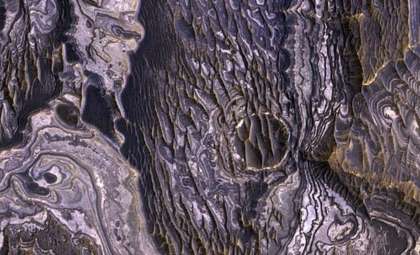
For nearly 20 years, scientists analyzing datasets from NASA's missions have observed strange spectral patterns in layered iron sulfates near Valles Marineris, the enormous canyon system on Mars. These signals baffled experts as they did not align with previously known minerals.

Mysterious Spectral Patterns Explored
The research, spearheaded by Dr. Janice Bishop of the SETI Institute and NASA’s Ames Research Center, combined orbital observation data with laboratory spectroscopy to decipher these puzzling signatures. The team focused on measurements from the CRISM instrument aboard NASA’s Mars Reconnaissance Orbiter.
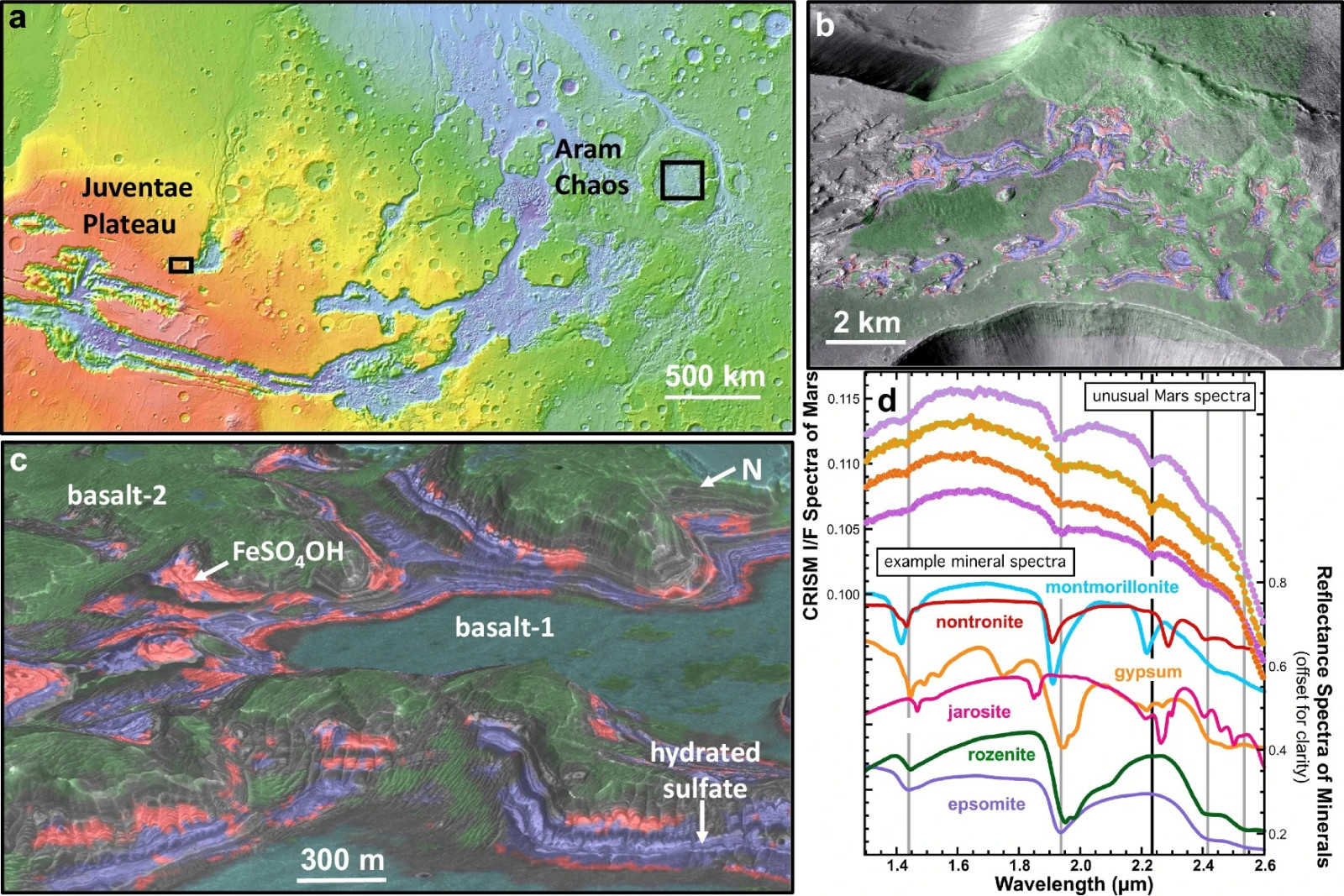
Published in Nature Communications, their findings suggest the presence of ferric hydroxysulfate, an uncommon iron sulfate phase that may constitute a mineral not previously classified. This compound was pinpointed by matching its infrared absorption in laboratory assays to the enigmatic spectral features detected from Mars.
Dr. Bishop noted their study concentrated on regions where layered sulfates and distinctive spectral bands coincided, indicating chemical alterations had occurred post-formation.
Evidence from Two Key Martian Locations
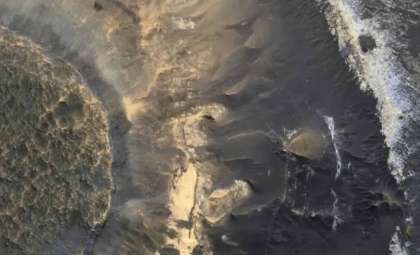
The team zeroed in on two sites adjacent to Valles Marineris: Aram Chaos, northeast of the canyon, and the Juventae Plateau above Juventae Chasma, which plunges approximately five kilometers deep.
Both areas display geological indications of historic water presence. Scientists observed ancient channel formations traversing the Juventae Plateau, implying that flowing water once existed here before evaporating and leaving behind sulfate deposits.
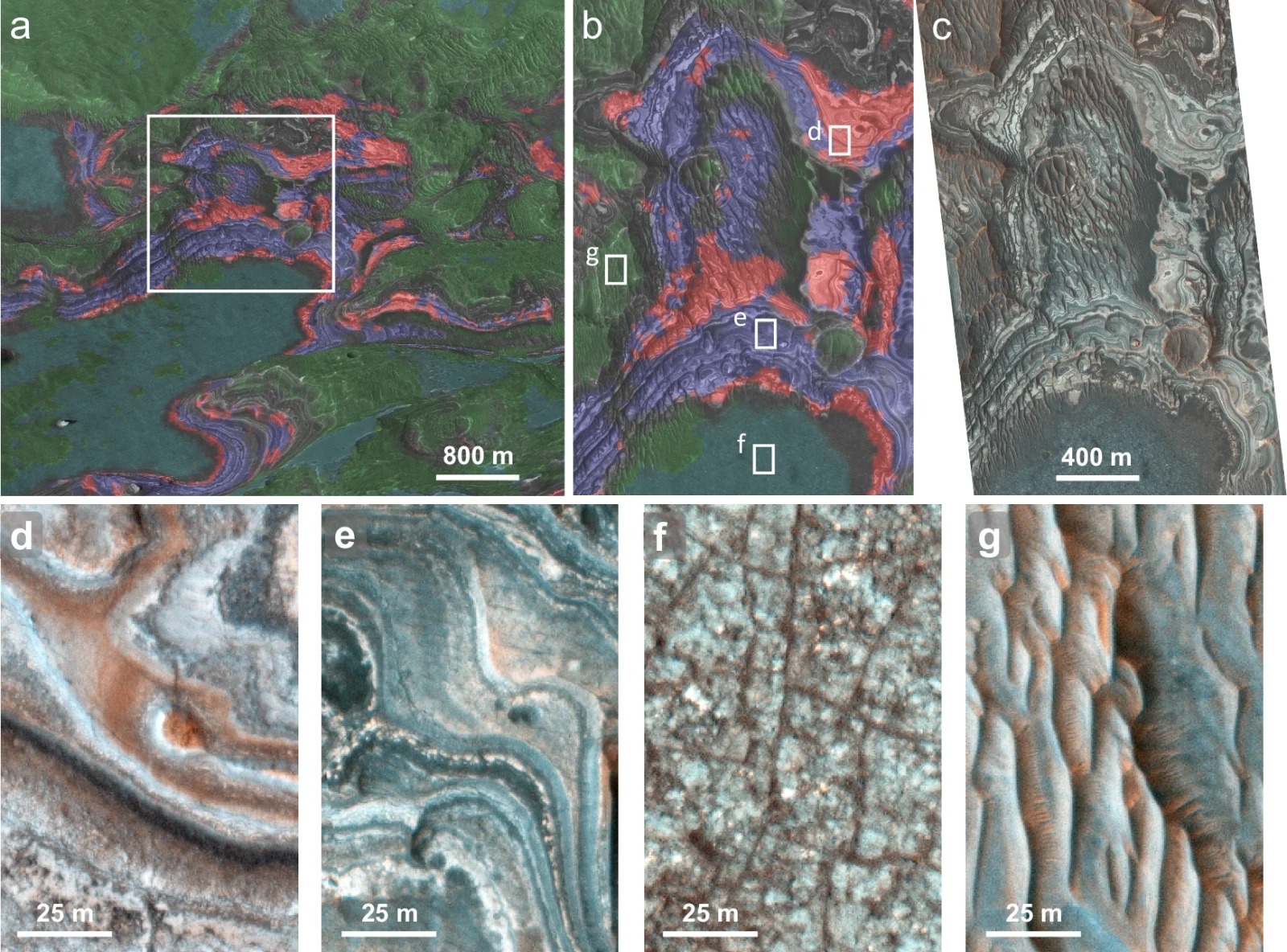
The sulfate layers are relatively thin, around one meter thick, nestled between basaltic bedrock. Planetary geologist Dr. Catherine Weitz remarked on this observation;
“Investigation of the morphologies and stratigraphies of these four compositional units allowed us to determine the age and formation relationships among the different units.”
Heating-Induced Mineral Transformations on Mars
Lab work shed light on possible formation mechanisms for the newfound mineral. Starting with rozenite, an iron sulfate containing four water molecules, heating it to around 50°C causes it to convert into szomolnokite, which holds only a single water molecule.
At temperatures exceeding 100°C and in the presence of oxygen, this mineral then changes into ferric hydroxysulfate. This transformation alters its atomic arrangement and infrared spectrum, enabling identification through orbital remote sensing.
The results also imply that Mars’ tenuous atmosphere still holds sufficient oxygen to support such reactions. Dr. Johannes Meusburger, a NASA postdoc specializing in this area, explained:
“Our experiments suggest that this ferric hydroxysulfate only forms when hydrated ferrous sulfates are heated in the presence of oxygen,” he said. “While the changes in the atomic structure are very small, this reaction drastically alters the way these minerals absorb infrared light, which allowed identification of this new mineral on Mars using CRISM.”
The detection of ferric hydroxysulfate points to possible geothermal or volcanic heating processes modifying sulfate deposits long after their initial formation, yielding a mineral that could be newly documented on Mars.
- Categories:
- News





0 comments
Sign in to Comment