

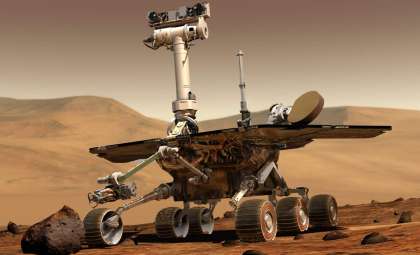
A pioneering rover prototype for Mars exploration utilizes wheels inspired by the sandfish lizard, enabling the vehicle to effectively "swim" through soft sand instead of merely rolling over it. Scientists at Universität Würzburg have adapted this natural locomotion method into advanced robotics, representing a significant step forward for future planetary rovers.
Bio-Inspired Mobility: Lessons From the Sandfish Lizard
Traversing Mars's loose and uneven sandy landscapes has posed ongoing difficulties for robotic explorers. Standard wheels tend to slip or get stuck, which can hinder mission progress and increase risk. “Most traditional wheel types are optimized for slower speeds and frequently encounter slippage or sinking issues on soft terrain,” explains researcher Amenosis Lopez, part of Professor Schmidt’s team.
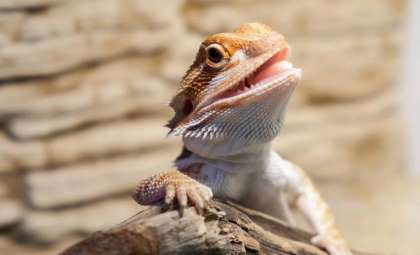
Marco Schmidt, Professor specializing in Embedded Systems and Sensors for Earth Observation (ESSEO), and his team took inspiration from the desert-adapted sandfish lizard, an animal known for its ability to maneuver beneath sandy surfaces. This biological strategy inspired the development of wheels that replicate the lizard’s characteristic wave-like movements instead of standard rotation.

“The wheels mimic the animal’s characteristic interaction with the ground, generating both longitudinal and lateral forces. The rover leaves sinusoidal tracks in the sand—this confirms that the intended swimming mechanism has been achieved,” Schmidt explains.
How the Swimming Wheels Enhance Rover Navigation
These novel wheels diverge from traditional models by integrating unique shapes, flexible components, and motion patterns that better distribute pressure on unstable surfaces. Preliminary tests demonstrated that the wheels enable steady movement across sandy terrain, addressing a frequent challenge faced by Mars rovers. Engineers fine-tuned the wheel width and weight to minimize ground pressure and avoid sinking, while the wheel surface texture is continuously being optimized for traction on mixed terrains.
The project is part of the VaMEx initiative supported by the German Aerospace Center, with crucial testing collaboration from the University of Bremen in both controlled sand environments and open fields. By applying an evolutionary-proven method from nature, this work elevates the potential for safer and more effective exploration of Mars.
Practical Testing Drives Continuous Refinements
In-depth testing in various environments confirmed the approach’s viability and highlighted areas for enhancement. “Our tests also revealed key insights to improve the design,” Schmidt remarks. Earlier prototypes were narrower and heavier than ideal, causing sinking and handling issues. Subsequent modifications to the wheels’ dimensions and weight distribution improved mobility, showcasing the value of iterative design when bringing biological concepts into engineering solutions.
In addition to hardware advances, researchers at Universität Würzburg are developing software systems for adaptive control. These will analyze real-time data on slippage and terrain interactions to dynamically adjust movement, enabling rovers to better tackle Mars's challenging landscapes. Such intelligent controls are expected to expand mission capabilities while lowering operational hazards.
Advancing Toward Autonomous, Versatile Mars Exploration
The vision is to merge the physical innovation of these sandfish-inspired wheels with sophisticated software that can autonomously navigate unpredictable surfaces. By continuously monitoring traction and adapting wheel movement and power, rovers could achieve a new level of adaptability similar to desert animals in nature.
This advancement highlights the promising role of biomimicry in space technology, offering innovative solutions that traditional designs struggle to provide. As planetary missions grow in complexity, mastering movement across loose soils might become vital to successful exploration efforts.
- Categories:
- News







0 comments
Sign in to Comment