

Scientists have developed a novel approach to convert plastic waste into hydrogen fuel by leveraging sulfuric acid reclaimed from discarded car batteries combined with solar energy. This integrated technique decomposes tough plastics while simultaneously generating valuable chemicals and sustainable fuel within a single reactor chamber.
The accumulation of plastic pollutants, especially polyethylene terephthalate (PET) found in beverage containers and packaging, poses significant environmental concerns. In parallel, spent lead-acid batteries often have their sulfuric acid component overlooked during recycling efforts, focusing primarily on lead recovery.
Researchers from the University of Cambridge have linked these waste challenges by designing a system that extracts industrially important chemical precursors from plastics and produces hydrogen gas powered by sunlight.

Reclaiming Raw Chemicals from Plastic Waste
The treatment process starts with PET plastic waste, which is shredded into small flakes before being combined with concentrated sulfuric acid and heated to approximately 140°C (284°F).
According to a statement from the University of Cambridge, this step breaks the PET polymers into ethylene glycol and terephthalic acid—valuable components for industrial use. The terephthalic acid naturally separates and can be recovered with ease. To enhance sustainability, the team sourced sulfuric acid from recycled lead-acid batteries rather than fresh supplies.
“Sulfuric acid is a component of car batteries, but when they are recycled, they only recover the lead component,” said Kay Kwarteng, the study’s lead author. “We could extract the battery acid and use that instead. It makes a strong argument for sustainability.”
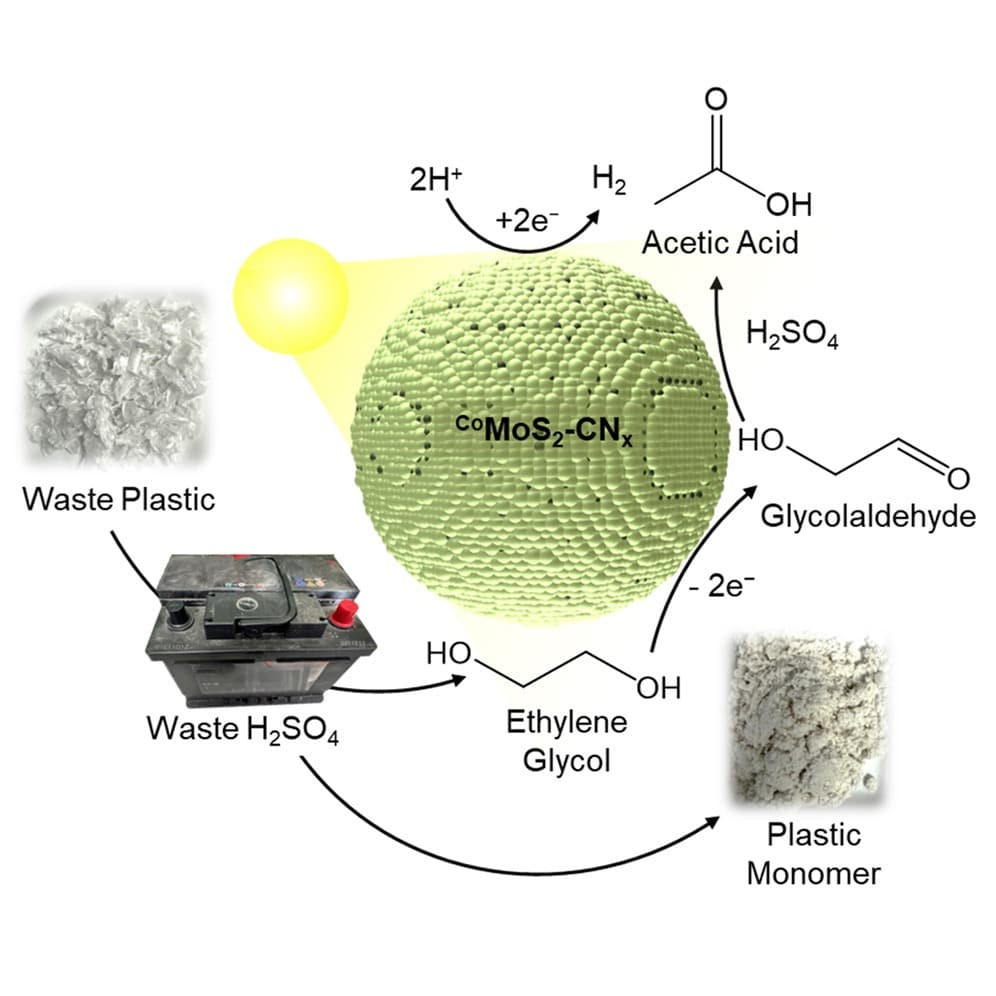
The leftover solution contains ethylene glycol, which is then used as a key input in the subsequent hydrogen production step.
Harnessing Sunlight for Hydrogen Generation
Transforming ethylene glycol into hydrogen posed a unique difficulty, as typical processes require basic (alkaline) conditions. However, the acidic solution derived from the initial plastic breakdown had to be utilized.
To overcome this, researchers engineered a molybdenum-based catalyst that remains effective in acidic environments. This catalyst, elaborated in the journal Joule, activates under visible light exposure.
“Once we expose the catalyst to light, it oxidizes the ethylene glycol which generates electrons,” Kwarteng explained. “These electrons can convert protons,” — present in the acid mixture — “to hydrogen, and they oxidize the ethylene glycol to acetic acid.”
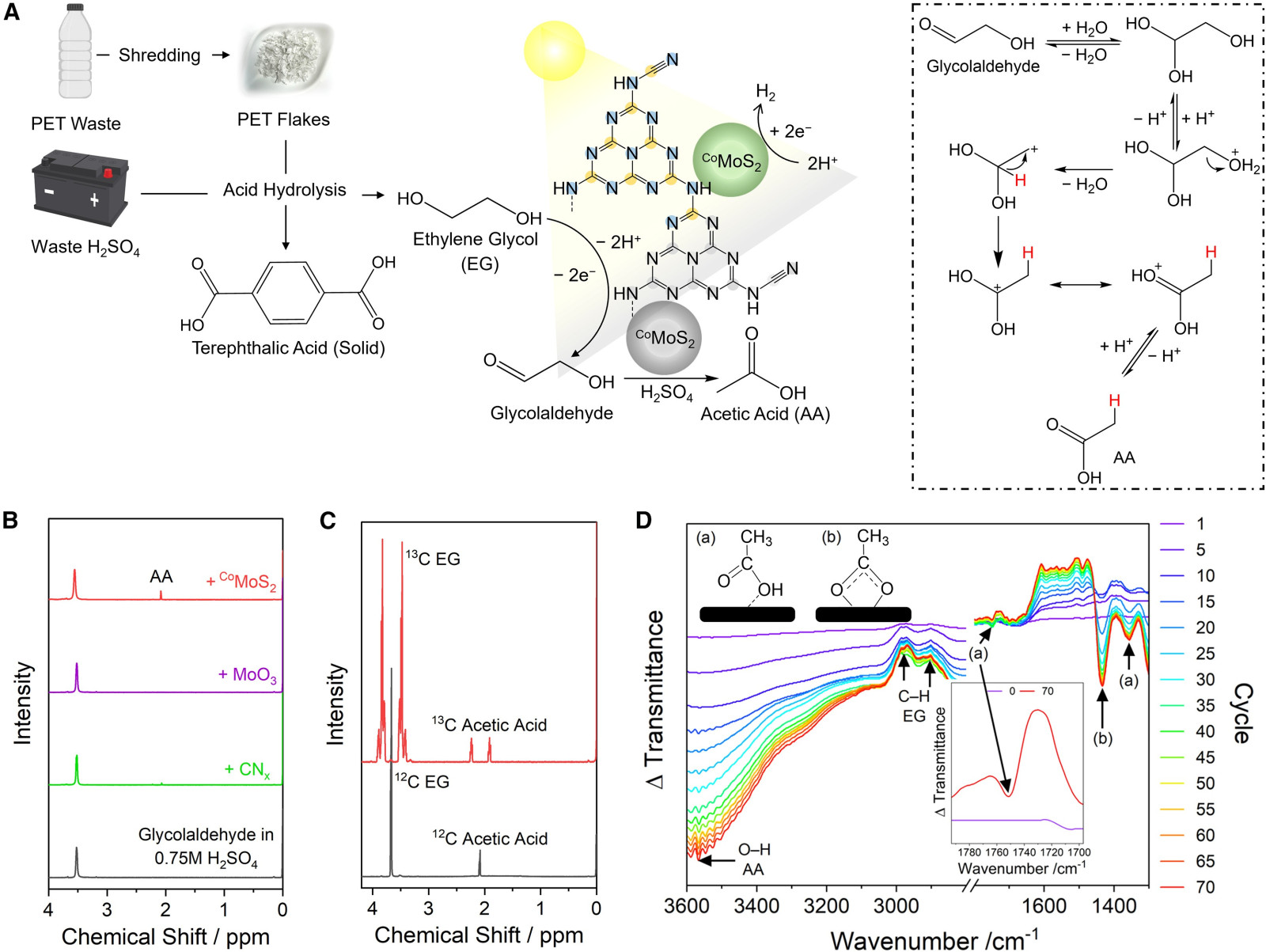
What sets this advancement apart is the ability to carry out both plastic depolymerization and hydrogen production sequentially inside the same reactor vessel. Although these reactions were individually known, integrating them into a single continuous process is a novel breakthrough.
Beyond Clean Hydrogen: Expanding Chemical Applications
The team envisions broader uses for this technology beyond just producing hydrogen fuel. Erwin Reisner, a professor specializing in energy and sustainable technologies at Cambridge, noted that the underlying chemistry could be adapted for hydrogenation reactions in various chemical manufacturing processes.
Rather than generating hydrogen gas alone, the method can facilitate direct hydrogenation of compounds introduced into the reactor system. Given that many hydrogenation procedures today depend on hydrogen sourced from fossil fuel feedstocks, this offers a greener alternative.
The researchers further tested this concept in a study published in Angewandte Chemie International Edition, where they used hydrogen derived from recycled plastics to convert nitrogen-containing molecules into valuable chemical intermediates common in pharmaceutical synthesis.
“When we use plastics for this hydrogenation, we reduce the carbon footprint by half,” Kwarteng said.

Currently, the team is working on adapting their approach for flow reactor systems that enable continuous chemical transformation. Speaking to Live Science, Amit Kumar, a catalysis expert at the University of St Andrews, praised the innovative use of recycled resources, while also emphasizing the importance of scaling this sunlight-driven chemistry for widespread application.
- Categories:
- Science













0 comments
Sign in to Comment